
Shojin ryori explained: understanding a Zen menu
Sesame, tofu, roots and seasons: a short guide to temple cooking and informed choices.
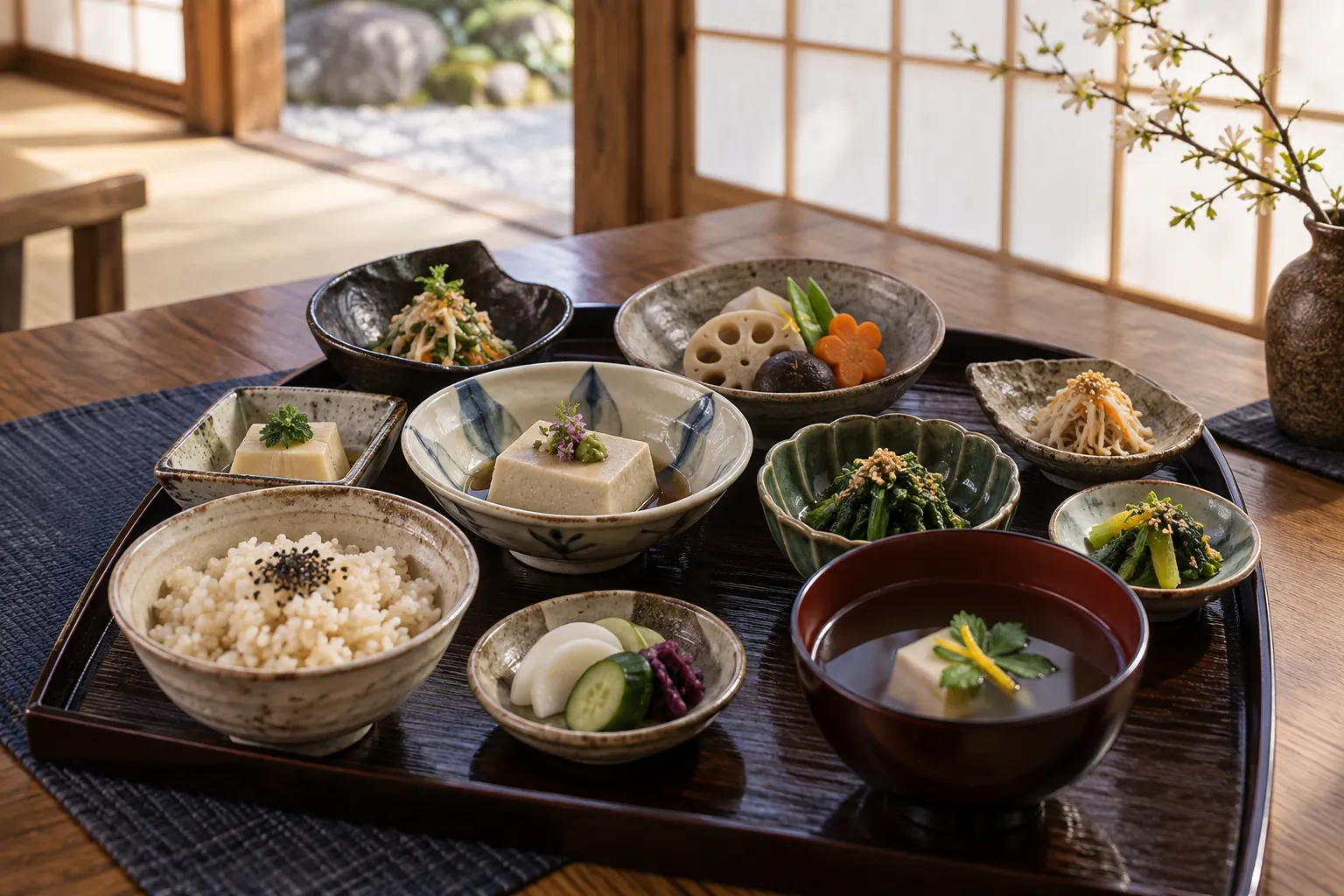
Shojin ryori is a precise form of Buddhist cooking in which the act of preparation matters as much as flavour. Developed in monastic settings through seasons, rituals and locally available ingredients, it has become a sought-after experience for vegan travellers in Japan. It is more than a menu without meat: it is a way of preparing, cutting, cooking and presenting ingredients with respect.
Temple cuisine is a useful shorthand, but each restaurant interprets the tradition within its own setting. Many menus are naturally vegan, while other offerings may contain fish stock, eggs, dairy or honey. Avoiding onions and garlic, common in several Buddhist traditions, should not be assumed outside a temple either. Asking questions does not spoil the experience; it allows you to understand what you are eating.
When reading a shojin ryori menu, look first at the structure of the meal. You might find rice, soup, a tofu dish, seasonal vegetables, pickles, something fried and a small bean or sesame preparation. Each serving is often modest, but the whole meal alternates temperatures, textures and intensities. Satisfaction comes from variety and balance rather than from one enormous central dish.
Colours and textures offer a useful starting point for observing an unfamiliar meal. Green, yellow, red, white and dark tones may share the same tray, while soft, crisp, springy, creamy and brothy elements follow one another without imitating animal products. Look before tasting: the way a root or leaf has been prepared can explain its role in the meal as clearly as a written description.
Tofu may be the first ingredient you recognise, but it is not always the main attraction. It can be silky and cold, grilled, fried as aburaage or made into a cream. Sesame adds richness and fragrance; miso brings fermentation; pickled vegetables provide contrast; rice supports the rhythm of eating. Every element has a purpose, and the cooking does not try to hide the plant itself.
To order with confidence, prepare a short question about stock and animal ingredients. Ask ‘dashi wa katsuo desu ka?’ and explain ‘watashi wa vegan desu’. If the restaurant serves a fixed set, tell the staff before sitting down and ask whether a complete alternative is possible. Do not confuse vegetarian with vegan or rely on one English label: sauces and broths are common sources of misunderstanding.
Distinguishing a meal grounded in shojin practice from one that simply borrows the name can be difficult on a first visit. Look for temples, ryokan or specialist restaurants with seasonal menus and clear information, and read recent reviews before paying for an expensive experience. The most elaborate menu is not necessarily the best introduction: a simple lunch can express the relationship between place, season and care.
Prices vary considerably. Lunch may cost less than dinner, while a temple stay sometimes includes breakfast and an evening meal with accommodation. Check what is included, how long service takes and whether you must remove your shoes or observe particular rules. Planning the practical details is part of respecting the setting, especially when visiting a religious space rather than an ordinary restaurant.
Shojin ryori can encourage attentive eating after you return home. Try a small meal of rice, tofu, a cooked vegetable, a pickle and miso soup made with plant-based stock. You do not need to reproduce a ceremony: notice the season, avoid waste and choose a cooking method that suits each ingredient's texture. That careful simplicity is part of what makes temple cooking memorable.
When explaining shojin ryori to someone unfamiliar with it, begin simply: Japanese Buddhist cuisine centred on plant ingredients, seasonality and attention. Then add the practical point for vegan diners: the setting does not automatically guarantee the suitability of every dish, so menus, stock and seasonings still need checking. Curiosity combined with care is a better approach than treating an unfamiliar meal as a test to pass.
The right question opens more doors than a perfect list.
Start here, then leave room for the unexpected. A plant-based journey can reveal just how many different ways there are to enjoy everyday life.