
Tokyo Vegan Ramen and Gyoza Class in Komae: The Klook Experience
An English-language 2.5-hour class focused on ramen and gyoza described as vegan: what the listing offers and what to check before booking.
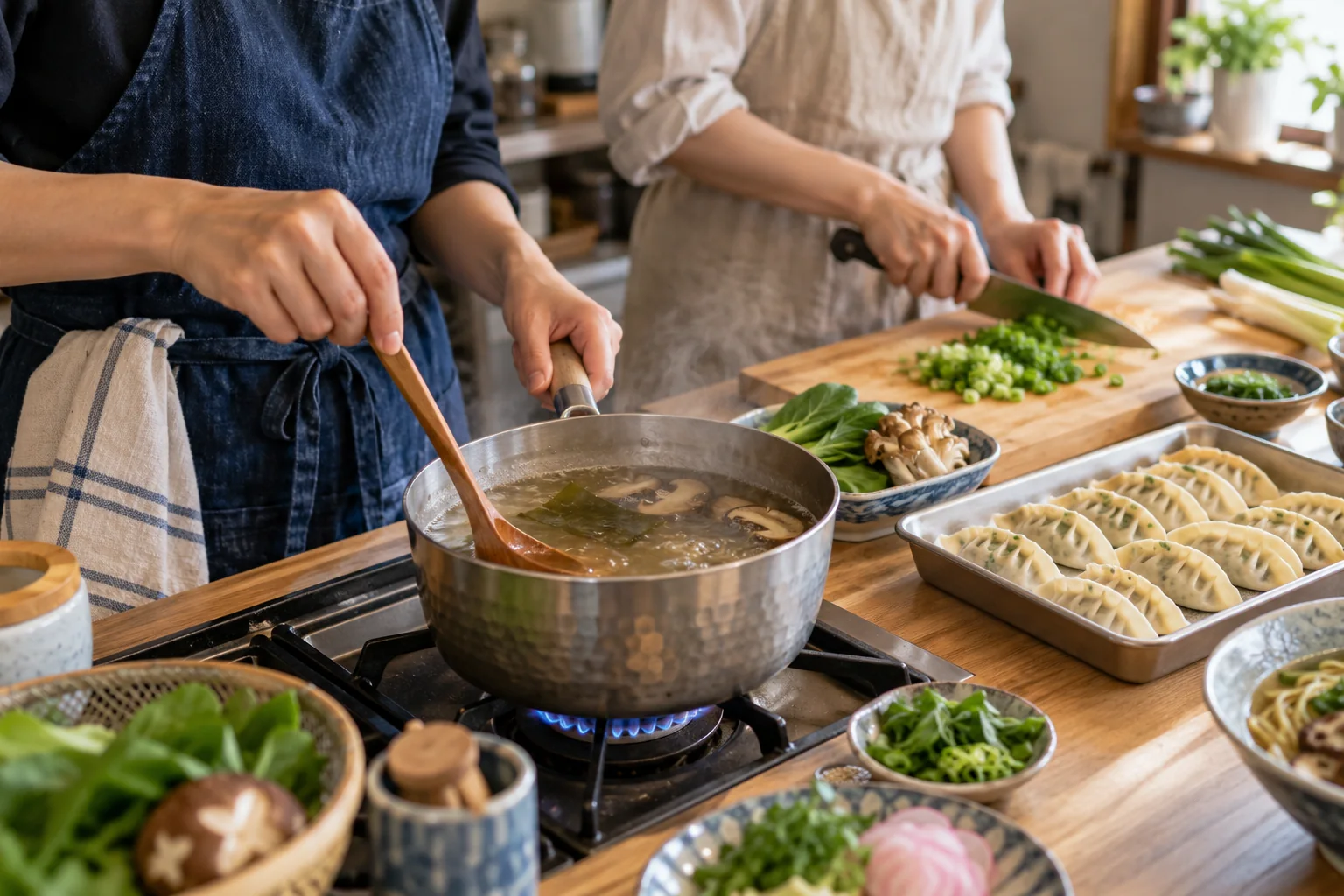
Immagine editoriale originale generata con AI: illustra una generica lezione di cucina di ramen e gyoza vegetali, ma non raffigura l'host, la sede o i partecipanti della scheda Klook.
If you want to learn how to make vegan ramen and gyoza while visiting Tokyo, Klook activity 109306 lists an English-language class in Komae lasting about two and a half hours. The programme describes ramen made from scratch and Japanese dumplings without animal ingredients, with a recipe to take home. Klook says the ingredients are 100% vegan and lists a group format. It is a concrete option to consider, after checking the current date, price and terms.
This is an informational guide based on the platform's listing, not a report of a class attended by our editorial team. On 29 October 2026 the listing was online and showed a duration of 2.5 hours, but we did not complete a booking or confirm a place for a particular date. Calendar options may vary by day and Klook market, so rely on the details in the checkout summary before paying.
What you cook in the class
The activity is hands-on: the description invites guests to cook and talk with the instructor and other participants rather than only watch a demonstration. Its focus is Japanese plant-based cooking through two familiar preparations, ramen and gyoza. The listing mentions traditional techniques and plant-based ingredients, but it does not publish a minute-by-minute schedule or the complete recipes. If you want to practise a specific technique, ask how much time the class will devote to it.
For the ramen, Klook describes a from-scratch preparation using entirely plant-based ingredients. That is useful for anyone curious about building a bowl without relying on meat or fish broth. However, the page does not list every ingredient used in each session, so you should not assume the recipe never changes. The ingredients may depend on the package or updates from the host. Ask which broth bases, sauces and seasonings will be used on your date.
The second dish is gyoza, described as dumplings made without meat or other animal products. Folding the wrappers, portioning the filling and cooking the dumplings offers a different experience from simply tasting them at a restaurant. The promotional page does not specify every wrapper or filling ingredient. If you avoid an ingredient by choice or for medical reasons, request a precise list instead of relying on the photograph or the general description of the class.
One useful way to continue learning at home is the recipe that, according to Klook, participants can take away. It makes it easier to repeat the dish and remember the steps after your trip. The listing does not say whether the recipe is printed or digital, or which language it uses; ask before booking if that matters to you. You can also practise in your own kitchen with our Japanese vegan recipes, which are separate from the class materials.
The page displays several package options named 2.5-hour cooking class, gluten-free version and halal version. These are selectable options in the listing, not a general guarantee that every allergen is excluded or that dedicated utensils are used. For the package displayed, the selectable group size is shown as a minimum of two and a maximum of six participants. Recheck those limits in your cart, since they may differ if the option or calendar changes.
Duration, language, group and listed location
The listing places the activity at 1 Chome-7 Motoizumi, Komae, Tokyo 201-0013, and says to meet at the location. Komae is in the Tokyo metropolitan area, but it is not a central Tokyo neighbourhood: plan your journey using the address shown in the booking. Before leaving, check the host's final message for the entrance, arrival time and practical directions. Do not assume that a generic map pin is enough.
English is the listed language and the format is shared. If you are travelling with others, note the stated minimum: a booking may require at least two participants, while the displayed package lists a maximum of six. Do not assume that a private class is available or that the host can change languages without written confirmation. Send your question through the platform before paying so the organiser can answer about this specific activity.
The listing updates duration, packages, price and dates according to the selection. The version we checked shows 2.5 hours, while the older URL still contains “3-hour”, which does not match the current listing. We therefore use the current duration and recommend checking it again before purchase. We do not quote a price in one currency: Klook may display different amounts and availability depending on country, date and selected package.
The word vegan describes the ingredients declared for the class, but it is not a promise of safety for every allergy. The official JNTO guide to vegetarian and vegan food in Japan explains why ingredients and broths deserve attention. For a class, also ask about sauces, gyoza wrappers, surfaces and shared utensils. The Klook listing does not publish a guarantee that there will be no cross-contact.
How to check the vegan menu and allergens
In particular, ask whether the broth, tare, flavoured oil and seasonings are fully plant-based, and check for ingredients you need to include or avoid. You can write in Japanese: 「このコースの材料と、調理器具の共用について確認できますか?」, meaning “Could you confirm this class's ingredients and whether cooking utensils are shared?” If you have an allergy, add its exact name and wait for an individual answer before booking.
If you need to avoid gluten, do not rely only on the package name: check the noodles, soy sauce, wrappers, utensils and procedures with the organiser. A package called “gluten-free” does not by itself prove that there is no contact with other flours. The same applies to “halal”, which addresses requirements different from veganism. If the host's reply does not cover your particular need, treat the activity as unconfirmed and do not proceed with the purchase.
Before confirming, check five details for the date you selected: duration, language, minimum and maximum group size, address and package option. Read the cancellation policy in the final checkout summary and keep the confirmation with the activity's contact details. If the calendar does not show a selectable date, an online page does not mean a place is available. Try again later or ask Klook whether the class can be booked during your trip.
To reach Komae, do not rely on travel times copied from an old review. Open the address from your confirmation, check the station and walking route in your preferred map service, and allow extra time for changes. The listing says “meet at location”, but the instructions for your booking are the ones to follow. If you have mobility needs, ask in advance whether the kitchen has stairs or other access barriers.
Booking, price and availability
This class may suit you if you want to learn two Japanese preparations by taking part and would like a recipe to repeat at home. It may not be right if you need a one-to-one lesson, professional training or an allergy guarantee the page does not provide. To compare different formats, read our guide to vegan cooking classes in Japan, which distinguishes dedicated vegan classes from experiences with a selectable option.
Kyoto has a separate ramen and gyoza class with Kyoto Green Cuisine, covered in our article about the Arashiyama class. If you would rather learn to make sushi, see our Tokyo cooking-class guide and verify the conditions for your chosen date with the organiser. These links help compare content and logistics, but each activity has its own menu and rules.
For cultural context, JNTO explains why broths, seasonings and hidden ingredients deserve attention when eating vegan in Japan. You can pair the class with our guide to vegan-friendly places to eat, checking the verification date for each listing. A short list of alternatives near the rest of your itinerary is useful if the class runs on a different day or availability changes.
Who this class may suit
Is the class suitable for English speakers? The listing names English as the activity language, but does not describe the level of instruction or the written materials. If you need slower explanations, materials in another language or support following the recipes, contact the host through the platform. Klook says a recipe is included, while its language and format should be confirmed.
How much does it cost, and when does it run? The price and calendar depend on the date, Klook market and selected package. We did not confirm a purchasable date during our check, so we do not present a price or start time as guaranteed. Open the activity, select your date and review the full checkout summary before paying; keep the confirmation as your final reference.
Frequently asked questions
Editorial verification was completed on 29 October 2026 using the Klook activity 109306 listing and the JNTO guide to vegetarian and vegan food. We checked the description, language, duration, address and displayed options, but did not select a date or confirm availability or the final price. The cover is original AI-generated illustrative artwork; it does not depict the host, home or actual participants. Check the platform before booking.