
Vegan cooking classes in Japan: ramen, gyoza and shojin
Real experiences in Tokyo, Kyoto and Osaka: which are fully plant-based, what you will cook and what to check before booking.
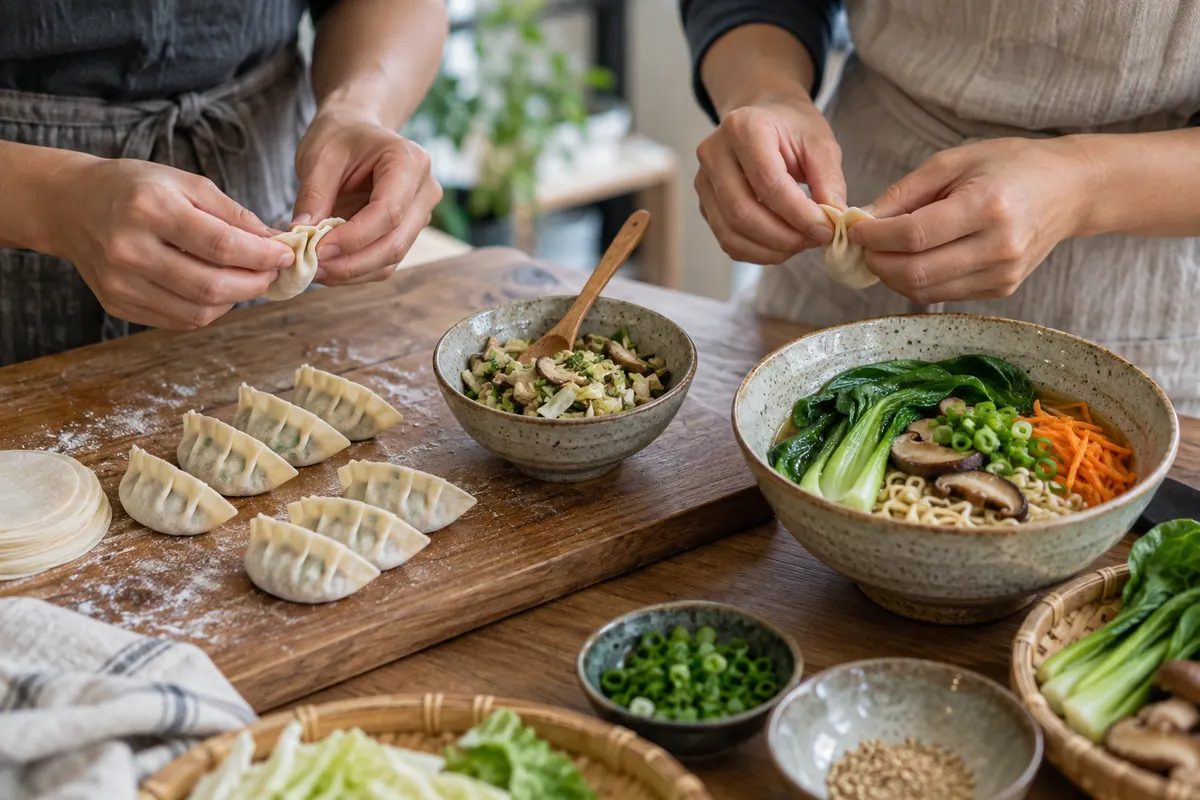
If you want to learn vegan Japanese cooking while travelling, you can compare real ramen and gyoza classes in Tokyo and Kyoto, plus a private shojin lesson in Asakusa. The important differences are how clearly the menu is confirmed as plant-based, the teaching language, duration, group size and availability on your date. This guide summarises official listings checked on 24 September 2026 and separates fully plant-based classes from experiences that need an individual confirmation.
This is not a report of a class attended by Nippon Vegan Guide and it does not rate the instructors. It is a practical guide to choosing a vegan cooking class in Japan without confusing an online listing with a confirmed place. Fees, calendars, menus and rules can change; always open the organiser’s or platform’s current page before paying. If a date is missing or the answer about the menu is unclear, treat the experience as needing confirmation rather than as a fixed part of your itinerary.
First distinction: fully vegan or vegan-friendly?
Start by distinguishing a class described as entirely plant-based from a lesson that offers a vegan or vegetarian option. In the first case, the programme describes the class ingredients as plant-based; in the second, you need to select the correct menu and clarify what it excludes. Shojin refers to a Buddhist culinary tradition centred on plant ingredients, but the word alone does not verify stock, seasonings or individual requests. JNTO advises travellers to watch for hidden ingredients, including fish-based dashi.
In Komae, in the Tokyo metropolitan area, Klook activity 109306 lists an English-language class focused on ramen and gyoza made with ingredients described as 100% vegan. The current duration is two and a half hours, although the older URL slug says three hours. The page gives a meeting point in Motoizumi, Komae, and a group format with quantities selectable from two to six participants. It is a concrete option to compare if you want to make a plant-based broth and fold gyoza by hand.
Tokyo, Komae: ramen and gyoza on Klook
The platform’s description says you will make ramen from scratch, prepare gyoza without meat or other animal ingredients, and take recipes home. Do not infer that a specific date is available merely because the page exists: the calendar can show different options by date and Klook market. At our editorial check, we could not confirm a place for a particular date. Before purchase, check the current duration, meeting point, language, minimum group size, cancellation terms and allergens on the updated listing.
In Kyoto, Kyoto Green Cuisine lists a private shoyu and miso ramen with gyoza class described as 100% plant-based and dashi-free. The official page gives a two-hour duration and a published fee of ¥10,000 per person. It also lists a matcha and wagashi option: the experience takes about two and a half hours and the overview page publishes ¥12,000 per person. These are the amounts visible at the time of checking, not permanent prices, so confirm them before booking.
Kyoto, Arashiyama: ramen, gyoza and matcha
The class takes place in the Arashiyama area, but the exact meeting point is sent after booking. The official page lists English, groups of one to four, and ingredients, an apron, water, tea and recipes to take home. It says the session is exclusive to your group, without strangers joining. That can make it easier to ask questions at your own pace, but it does not guarantee a place on your chosen date: submit a request and wait for the organiser’s confirmation.
Even a class described as vegan is not automatically suitable for every allergy. Kyoto Green Cuisine notes that its kitchen handles soy and wheat and asks guests to report severe allergies in advance. Explain which ingredients you need to avoid and ask whether the preparation and shared surfaces can accommodate your needs. If you avoid the five pungent roots, clarify garlic, onion and seasonings separately: the absence of animal products does not mean that a recipe excludes these ingredients.
Tokyo, Asakusa: shojin ryori with CHAGOHAN
For Buddhist cooking, CHAGOHAN TOKYO lists a private shojin cuisine class with matcha in Asakusa. The page calls it vegan and vegetarian friendly and describes plant-based dishes including pressed sushi, vegetable skewers, miso dengaku and miso soup. The stated duration is three hours and the class is taught in English. The wording matters: vegan-friendly by itself is not the same as confirmation of the complete menu for your date.
CHAGOHAN asks guests to submit preferred dates and a start time; the listed slots are 10:00 and 15:00. A booking is confirmed only after the organiser replies, the terms are accepted and payment is made. The official page checked showed a total fee of ¥77,000 for one or two people, with higher totals for larger groups. Treat that as the published amount at the time of checking, not a guaranteed quote: confirm the total, group size and fully vegan request before proceeding.
If your itinerary includes Osaka, Klook also lists a sushi class with a selectable Vegan/Vegetarian Menu. The activity page gives a duration of one hour and forty minutes and describes a general sushi-making experience; it would be inaccurate to call the entire class exclusively vegan. We could not confirm date availability during our check. Consider it only if the platform actually lets you select that menu and the organiser explicitly answers questions about fish, eggs, dairy, stocks, sauces and cross-contact.
Practical questions before booking
To compare two classes, write down five things: what you will make yourself, which ingredients are included, the teaching language, the maximum group size and how the date is confirmed. Then compare the total cost, not just a per-person price: a private session may have a group fee, and a booking platform may show supplements or different terms for each package. Read cancellation rules as well, and allow enough time to reach the meeting point.
Send dietary requests in writing before paying. Specify meat, fish, eggs, dairy, honey and dashi; list allergies, coeliac disease or a request to avoid garlic and onion separately. A useful Japanese sentence is: 「動物性食材を使わないヴィーガンメニューを希望します。だしも含めてご確認ください。」 It means: I would like a vegan menu without animal-derived ingredients; please check the stock as well. For serious allergies, do not rely on a general phrase: name the ingredient and ask for a specific answer about the kitchen and shared surfaces.
Which class makes sense for a first lesson? If you want a programme described as 100% vegan and focused on ramen and gyoza, compare the Klook Tokyo and Kyoto Green Cuisine listings. If you are interested in shojin tradition and a private Asakusa experience, contact CHAGOHAN and explicitly agree the vegan menu. Is a vegetarian class always vegan? No: eggs, dairy, honey or dashi may still be included. Can you repeat the recipes at home? Ask whether recipes are provided and what ingredients or equipment you need instead of assuming every school supplies the same materials.
After choosing a class, plan the rest of your trip with our Where to Eat directory, Japanese vegan recipes and guide to reading ingredients and menus in Japan. Use these pages to organise meals before and after the lesson, not as a substitute for confirmation from the teacher. The Continue Exploring panel links this article to three relevant Journal reads; use the IT, EN or JP selector to browse the other language versions.
Editorial verification and sources
Editorial verification: 24 September 2026. We checked Klook’s Tokyo and Osaka listings, the official Kyoto Green Cuisine and CHAGOHAN TOKYO pages, and JNTO’s background guide. The classes exist, but dates, prices, menus and availability must be reconfirmed with the operator or platform before payment. The cover is an original AI-generated editorial image: it illustrates a generic cooking scene and does not depict or document any specific class. No affiliate codes were added.
Sources and verification
- Klook · Tokyo vegan ramen and gyoza class, activity listing 109306
- Kyoto Green Cuisine · official vegan cooking class listing
- Kyoto Green Cuisine · official vegan ramen and gyoza class
- CHAGOHAN TOKYO · private shojin cuisine class with matcha
- Klook · Sushi Making Osaka, selectable Vegan/Vegetarian menu
- JNTO / Japan Travel · vegetarian and vegan guide to Japan