
Tokyo without reservations: neighbourhoods for a last-minute meal
From Shimokitazawa to Kuramae: practical ways to keep restaurant hunting from becoming a second job.
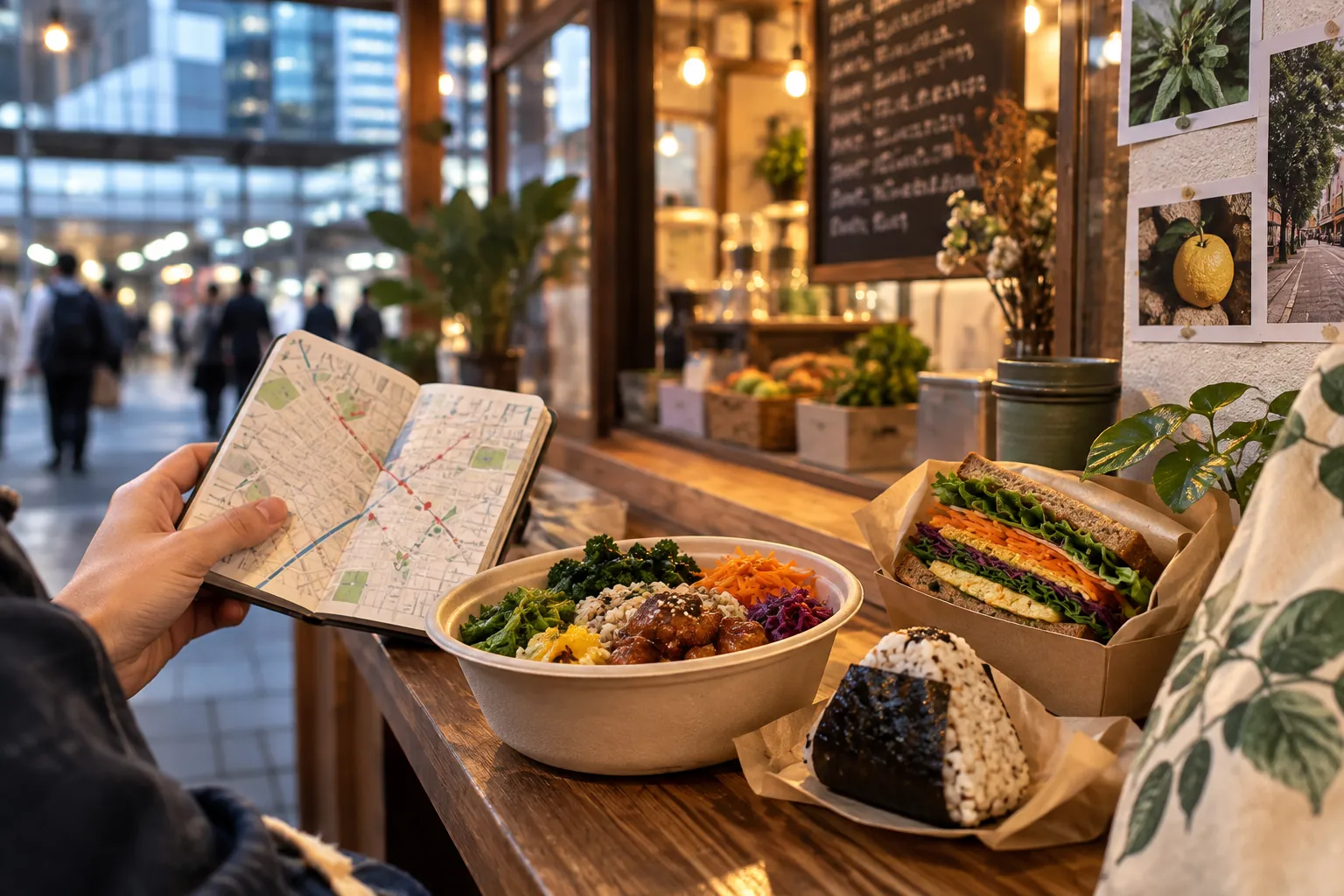
Tokyo rewards curiosity, but a little strategy helps when you want a vegan meal without a reservation. Choose a station, save two options and arrive before the evening rush. Areas with several independent cafés can make it easier to find an alternative if your first choice is full, closed for a holiday or has a longer queue than you expected.
Start by considering Shimokitazawa, where independent shops, music and casual restaurants fit naturally into the same outing. Look for readable menus and ask whether the whole offering is vegan or only selected dishes. A plant-based burger does not automatically mean an egg-free or dairy-free kitchen, and a simple-looking sauce may contain stock or mayonnaise. A clear question is better than ordering on appearance alone.
For a break between Harajuku, Omotesando and Shibuya, keep cafés, bakeries and markets as flexible possibilities. The local directory includes sweets, fruit sandwiches, mochi and plant-based options: use it to plan a snack, not to assume daily availability. Shop displays change quickly and seasonal items may sell out before evening, so keep a second place within walking distance in mind.
Shinjuku is useful for a central meal and an indoor backup. Department stores, stations and convenience shops may have packaged vegan choices, but a vegetarian label, the absence of visible meat or a green symbol is not sufficient. Read ingredients and allergens: chicken stock, bonito, gelatine, milk, eggs and honey can appear in savoury or sweet products. Keep the packaging if you need help translating an ingredient.
Kuramae suits a slower afternoon among workshops, cafés and the eastern side of central Tokyo. Do not assume that every specialty café serves a vegan meal. Look at the menu online, call a small venue if necessary and check when the kitchen closes. A simple rice, vegetable or tofu preparation may work, but only when staff can confirm the stock and seasonings used.
This guide uses practical criteria: distance from the station, a clear menu, the possibility of a fully vegan meal and a nearby backup. Add a fifth consideration: communication. A venue that answers an ingredient question clearly may be more useful than a very popular address with vague information. The aim is to eat with confidence, not to tick off the most fashionable place on a list.
If you want ramen, gyoza or okonomiyaki, look for explicitly vegan versions in advance. Tokyo has interesting plant-based offerings, but availability depends on the branch and season. For ramen, ask about the broth; for gyoza, check the wrapper, filling and sauce; for okonomiyaki, check mayonnaise and bonito flakes. Saving these questions on your phone makes a last-minute decision much easier.
An unplanned meal can still be a thoughtful experience. Have an early lunch, explore a neighbourhood, stop at a café and keep dinner for a venue with a longer service window. If travelling with non-vegan friends, look for varied menus with clearly separated options. Flexibility works best when everyone understands what has been checked and what remains only an assumption about the food.
Before leaving the hotel, check three things: how recent the information is, the actual distance from the station and the kitchen's closing time. Editorial directories help you get your bearings but cannot replace a venue's website or a call. With that small habit, Tokyo becomes easier to navigate: follow the city's energy, eat well and keep a vegan trip relaxed even when plans change.
A useful vegan Tokyo guide answers concrete questions: where can I find a complete meal, what can I order from a Japanese-only menu, how much time should I allow, and what is the alternative if the venue is closed? Save those questions with the directory addresses. Afterwards, update what you checked and separate unresolved information, so the next traveller can start with less uncertainty.
The right question opens more doors than a perfect list.
Start here, then leave room for the unexpected. A plant-based journey can reveal just how many different ways there are to enjoy everyday life.