
Izakaya-style miso aubergine, ready in 25 minutes
Sweet, glossy and comforting: a weeknight recipe with simple ingredients and plenty of umami.
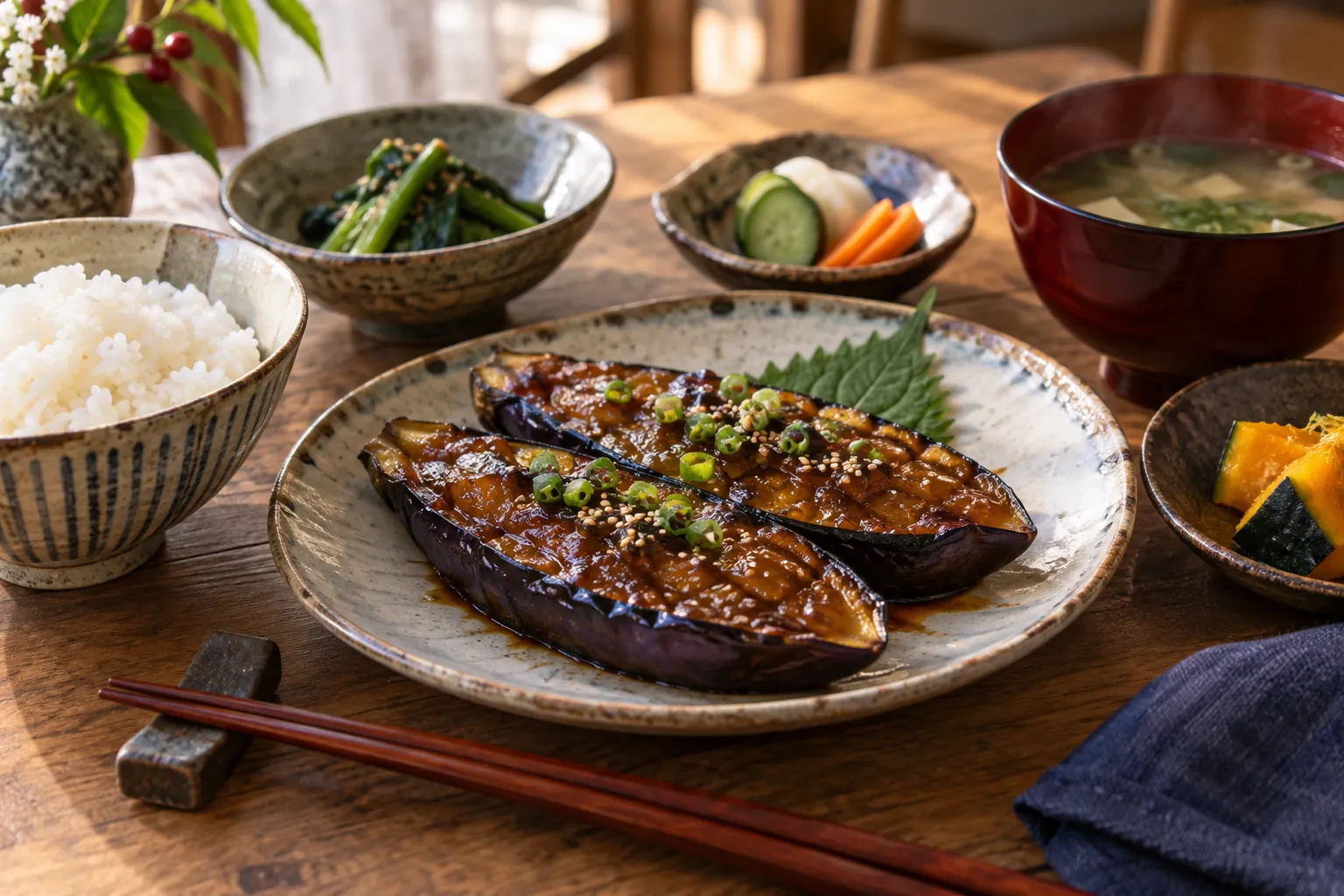
In Japan, miso is not an ingredient kept for special occasions: it is an everyday shortcut to depth and comfort. Here it meets aubergine, which absorbs the sauce like a sponge and becomes tender while keeping its caramelised edges. The combination is simple enough for a weekday, yet satisfying enough to make the meal feel considered.
The result is nasu dengaku, the miso-glazed aubergine often found in izakaya and home kitchens. This version is plant-based when you choose miso without animal ingredients and check your mirin. It works for a quick vegan dinner and for anyone curious about Japanese flavours without wanting to buy a cupboard full of unfamiliar products.
For two people, use two aubergines, a generous tablespoon of miso, a teaspoon of mirin, fresh ginger, a splash of water and a little neutral oil. White miso makes a sweeter, gentler glaze; red miso gives a stronger flavour, especially welcome in winter. Toasted sesame, spring onion and shiso are optional finishes: let the sauce remain the focus.
Halve the aubergines lengthways and lightly score a grid into the flesh without cutting through the skin. This increases the surface that can absorb the seasoning and helps the flesh cook sooner. Heat a wide frying pan, place the aubergines cut-side down and let them brown patiently. Crowding them together creates steam before the golden edges have time to develop.
While they cook, stir the miso, mirin, grated ginger and water into a smooth paste. Once the cut surface is golden and the flesh begins to give under a fork, turn the aubergines and spread the sauce over the scored flesh. Lower the heat, cover and cook for around eight minutes. The glaze should become glossy and cling to the aubergine, not burn on the bottom.
Mirin contributes sweetness and aroma. For an alcohol-free version, use a teaspoon of maple syrup with a few drops of water. For a gluten-free meal, check the miso label and use appropriately certified ingredients where needed. Add shichimi togarashi if you enjoy heat; for a fresher contrast, serve with marinated cucumber or a simple cabbage salad.
Serve the miso aubergine over Japanese white rice, brown rice or buckwheat noodles whose ingredients you have checked. The contrast between the sweet-salty glaze and a crunchy side makes a satisfying plate without imitating meat or fish. For a small izakaya-style spread at home, add edamame, chilled tofu with spring onion and a cup of unsweetened green tea.
This preparation can also fit into meal planning. Cook a double portion, let the aubergines cool and refrigerate them in a closed container. The next day, gently reheat in a pan with a spoonful of water, or cut into pieces for a donburi topping. Add the sesame finish when serving rather than freezing it with the dish, as its fragrance fades quickly.
When looking for a similar dish in a Japanese restaurant, ask whether it contains fish stock or oyster sauce: the preparation's name alone does not make it vegan. At home, you can check each step and adjust sweetness, salt and umami yourself. That freedom makes miso aubergine a useful introduction to Japanese vegan cooking rather than a recipe you must follow without thought.
The final trick is patience. A well-heated pan at the start, gentler heat while glazing and a two-minute rest before serving matter more than any rare ingredient. If you make it on a weekday evening, note which miso you used and how much ginger you enjoyed. Next time, those small observations will help you make a version that feels like your own.
To find the idea again, keep three terms in your recipe notes: nasu dengaku, miso aubergine and Japanese vegan recipe. They describe the same family of flavours from different angles. When cooking for guests, explain how an absorbent vegetable meets a fermented seasoning. That simple detail can open a conversation about miso, fermentation and the everyday cooking of Japan.
The right question opens more doors than a perfect list.
Start here, then leave room for the unexpected. A plant-based journey can reveal just how many different ways there are to enjoy everyday life.