
Vegan yaki onigiri in a pan: crisp rice without butter or dashi
How to make grilled rice balls with soy sauce, choose plant-based seasonings and avoid the mistakes that make them fall apart.
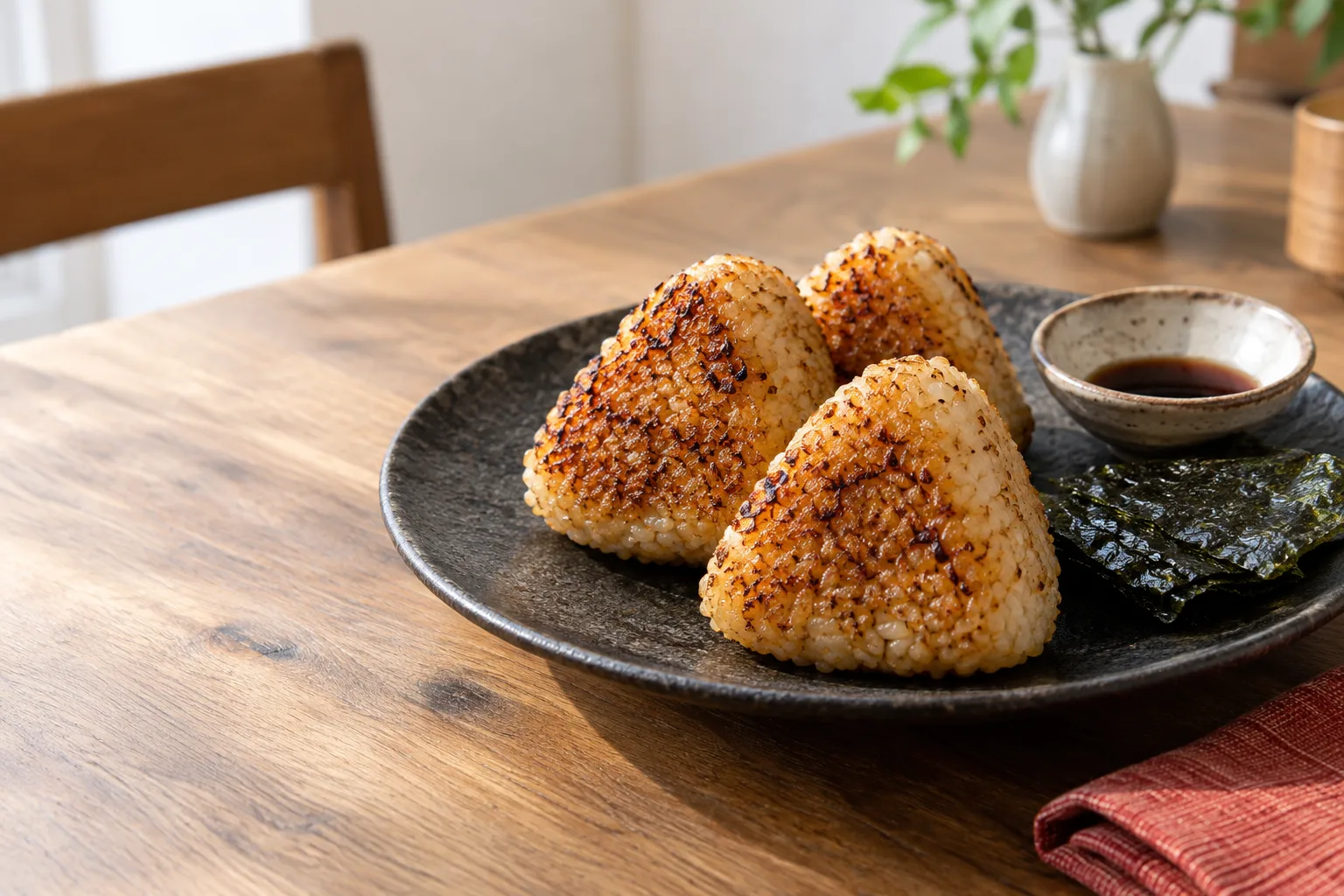
Vegan yaki onigiri are compact portions of rice, browned in a pan and finished with a light brush of soy sauce. You do not need butter, fish stock or an elaborate filling for a plant-based version: suitable rice, a checked seasoning and a little patience are enough. The decisive step is allowing a crust to form before turning the rice, instead of wetting it too heavily with sauce.
This is a home-cooking proposal from our editorial team, not a report of a tested kitchen session and not a restaurant-certified recipe. The Japanese sources listed below explain the basic onigiri technique and the grilled variation. The quantities are an editorial starting point to adapt to your rice and pan; we do not attach a guaranteed cooking time to them.
Ingredients and equipment
For four small rice balls, prepare about 400 grams of cooked short-grain Japanese rice, one tablespoon of soy sauce to add gradually and a little neutral oil for the pan. Plain nori is optional and can be added at the end. You will also need a small bowl of water, a thin spatula and a pan with an even base. No mould is necessary: a rounded shape works too.
Use rice cooked in water, without stock cubes or added seasoning. Choose the soy sauce by reading the ingredient list rather than replacing it automatically with a noodle seasoning or ready-made sauce, because the composition varies. The word ‘soy’ on the front of a package does not describe every ingredient. For more Japanese plant-based ideas, explore the recipes section on Nippon Vegan Guide.
Forming stable portions
Work while the rice is warm enough to handle but not hot enough to burn your hands. Divide it into four similar portions so you can brown them more evenly. Lightly moisten clean hands and compact each portion without turning it into a hard mass. The aim is a shape that holds together when placed in the pan, not a perfect triangle made for a photograph.
If the first portion opens, stop before shaping the rest and try a lower, more regular form. Very thin points are difficult to move. Avoid a wet filling on your first attempt, as it adds an unnecessary variable. A plain base helps you understand whether the problem comes from the rice texture, the pressure of shaping or the pan.
Brown first, season afterwards
Spread a thin film of oil in the pan and heat it moderately. Place the rice balls with enough room for your spatula. Do not move them constantly: watch the edges and gently lift only one when the surface seems set. If it resists, do not pull it away from the pan. Adjust the heat and wait, checking that no burnt smell develops.
Turn each piece while supporting it fully. When both sides have colour, brush a little soy sauce over the surface and finish browning carefully. Adding all the seasoning at the beginning makes it harder to distinguish the rice crust from sauce that is simply darkening. Keep a plate nearby: once the result is ready, remove the onigiri instead of leaving them on the hot base.
Serve without covering the rice
Serve them promptly, with plain nori on the side and a plant-based accompaniment that adds variety to the meal. The crust is the focus, so avoid flooding it with sauce at the table. Offer a small dish of seasoning instead and let each person add more if needed. We do not describe these rice balls as a nutritionally complete meal or as suitable for every dietary need.
You can build a simple menu around them with the site's Japanese vegan recipes, miso-glazed aubergine or the cooking classes listed in our directory. Check which vegan menu is actually offered before booking a class, and keep a plain alternative available when cooking for people with allergies.
Practical questions
Are they automatically vegan? No. This version is vegan only when you choose plant-based ingredients. A rice ball bought or ordered elsewhere may contain different seasonings. Ask how it was made instead of inferring the ingredients from its appearance or name.
Do they have to be triangular? No. A simple, stable shape is better than a fragile triangle. Keep the portions similar and make the base wide enough to cook and turn them without difficulty.
Can you make them without soy sauce? You can leave the rice simply browned, but the flavour will be different. If you must avoid an ingredient because of an allergy, check substitutes, equipment and cross-contact as well: vegan does not mean allergen-free.
Documentary check: 14 September 2026. Japan's Ministry of Agriculture describes the basic preparation of onigiri with rice, filling and nori. Kikkoman Corporation also describes the grilled variation with soy sauce; its collection includes non-vegan recipes, which should not be confused with this plant-based proposal. No affiliate links are used.
The right question opens more doors than a perfect list.
Start here, then leave room for the unexpected. A plant-based journey can reveal just how many different ways there are to enjoy everyday life.