
SAIDO in Jiyugaoka: fully vegan Japanese cuisine in Tokyo
A Japanese restaurant that describes its menu as fully vegan: SAIDO’s published menu and prices, reservations and address in Jiyugaoka, plus what to check about hours and allergens.
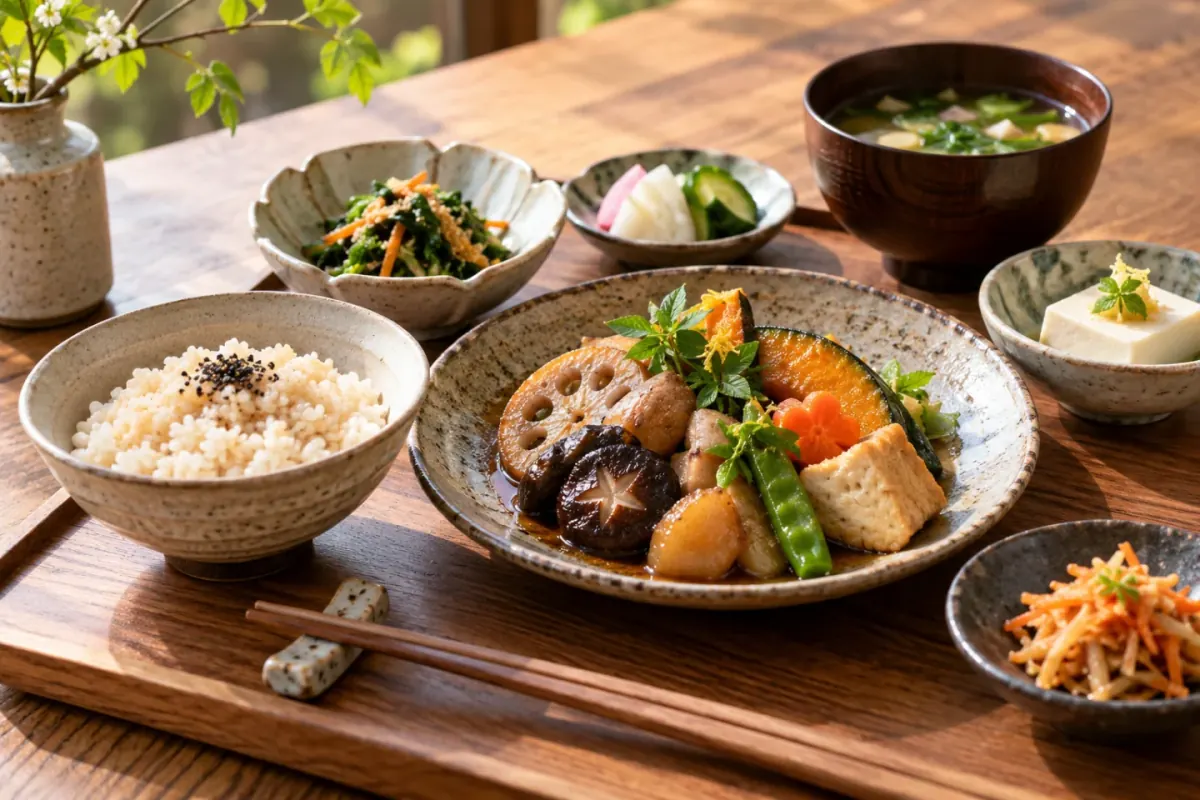
Original AI-generated editorial artwork illustrating a plant-based Japanese meal; it does not depict SAIDO, its interior or a dish from its current menu.
If you are looking for a fully vegan Japanese restaurant in Tokyo, SAIDO (菜道) in Jiyugaoka is worth considering. The restaurant says its recipes contain no animal-derived ingredients and presents contemporary Japanese food. Reservations are required. Its website lists lunch from 12:00 to 15:00 and dinner from 18:00 to 21:00; the address is 2-15-10 Jiyugaoka, Meguro-ku. Recheck the menu, prices and hours when booking.
We checked the information on 20 October 2026 against SAIDO’s official Japanese and English pages, its TableCheck reservation page and a feature by the Tokyo metropolitan tourism authority. This is not a review based on a visit: we have not tried the menu, measured travel times or checked availability for a particular date. Dish descriptions and the restaurant’s philosophy are attributed to their sources, not presented as independent findings.
Vegan Japanese food, not a temple-cuisine imitation
SAIDO is in Jiyugaoka, in Tokyo’s Meguro ward, and describes its food as a contemporary reinterpretation of Japanese cuisine. The official website says it opened in 2018 and that its cooking avoids animal ingredients, chemical additives, refined sugar and the five pungent roots known as go-kun. This is the restaurant’s stated menu and philosophy, not an external certification verified by Nippon Vegan Guide.
That distinction matters: SAIDO is not simply a mixed-menu restaurant with one vegan dish. Its Japanese page describes fully vegan recipes and says meat, fish, eggs and dairy are not used. This may make choosing a restaurant easier while travelling, but the word vegan does not replace checking specific ingredients, cross-contact or kitchen procedures when you have an allergy or sensitivity.
SAIDO should not be confused with a temple dining hall or a shojin ryori experience. The restaurant describes its approach as reimagined Japanese cuisine and mentions noodles, rice dishes, fried foods and small plates in a contemporary format. If you are interested in Buddhist cuisine, read our guide to shojin ryori and ingredients to check: the experiences may both focus on plant-based cooking, but they are not the same thing.
Published menu and prices: what to check
For lunch, the Japanese page lists a ¥2,970 menu with soup, salad, a main, dessert and two drinks. The main is selected from five noodle dishes and four rice dishes, according to the restaurant’s information at the time of our check. The English page instead describes a combo platter with a choice of noodles, a rice bowl or curry soup. The pages do not present the details identically, so check what is shown for your date in the reservation system.
For dinner, the Japanese site lists two set menus at ¥3,300 and ¥3,850, with combinations of small plates, noodles or rice and drinks. It also lists a seasonal chef’s course at ¥5,280, to be booked at least one day ahead, and special courses at ¥8,800 or ¥11,000, with at least two days’ notice stated. These are prices published by the restaurant, not guaranteed quotes: confirm the total, menu and terms in TableCheck.
Do not treat these prices as a permanent price list. Availability, courses, included drinks and reservation lead times can change. A descriptive page may remain online after a menu update; the practical references closest to your trip are the options shown for your selected date and the confirmation you receive after booking.
A Tokyo Metropolitan Government tourism feature from December 2025 described plant-based interpretations of Japanese dishes such as ramen, unaju and yakitori, using mushrooms, vegetables and other plant ingredients. It is an editorial feature about the chef’s work, not proof that each dish is still available today. We mention these examples to explain the creative style associated with SAIDO, not to promise a particular dish on your visit.
The most reliable way to plan is to open SAIDO’s official TableCheck reservation page, select your actual date and read the available options. The restaurant says reservations are required; it also publishes minimum notice for seasonal courses. We did not complete a transaction or check seats: an active page does not mean there is availability on your preferred date.
Reservations, hours and address in Jiyugaoka
The pages list lunch from 12:00 to 15:00, with last order at 14:00, and dinner from 18:00 to 21:00, with last order at 20:00. However, the dinner menu section gives a reservation window of 18:00 to 20:30. As the presentation is not fully consistent, treat the headline hours as published information and confirm the bookable time in the calendar; contact the restaurant about holidays or changes.
The official address is A&D House 101, 2-15-10 Jiyugaoka, Meguro-ku, Tokyo 152-0035: 〒152-0035 東京都目黒区自由が丘2丁目15-10 A&Dハウス101. The website lists +81 3-5726-9500. Copy the full address into a map and check the route from your starting point. The pages we consulted do not publish an official walking time from the station, so we do not estimate one.
Leave a little time to find your way around Jiyugaoka, especially if you have a fixed reservation time. Save your confirmation, the phone number and the Japanese address before leaving your hotel. The restaurant describes its location as set back from the main street; if your map shows similar results, check the street number and building name rather than relying on SAIDO alone.
The restaurant’s vegan cooking reduces uncertainty about animal ingredients in the menu it describes, but does not automatically answer every allergy question. We did not find a complete public allergen matrix or a guarantee of separate equipment on the pages we reviewed. If you have a serious reaction, contact the restaurant before paying and ask about the exact allergen, sauce, broth and preparation you need to consider.
Ingredients, dashi and allergies: ask ahead
JNTO notes that Japanese broths and seasonings can contain less visible animal ingredients, including fish dashi, and recommends communicating dietary needs in advance, especially for set menus. SAIDO says its cooking contains no animal-derived ingredients; the general advice is still relevant to allergies, individual requests, and drinks or products outside the main preparation.
If you want to write ahead, you can ask: 「予約した日のメニューと、アレルギー対応や調理器具の共用について確認できますか?」 This means: Can you confirm the menu for my reservation date, how allergies are handled and whether utensils are shared? Name the specific allergen in Japanese or attach a reliable allergy card. A general reply is not a safety guarantee; consider another option if the staff cannot clarify.
SAIDO may suit travellers who want contemporary Japanese food at a restaurant that describes its whole menu as vegan, with lunch, dinner and seasonal course formats. It is not a place to assume you can walk into without a reservation, and it should not be described as shojin ryori. Compare it with our Where to Eat directory, our guide to vegan ramen in Tokyo and the phrases in Learn Japanese.
Plan the visit as a meal at a set time, not as a flexible stop between shops. Confirm duration, format, drinks and cancellation policy in your reservation; Nippon Vegan Guide does not arrange or sell the service. If SAIDO has no seats on your date, use the directory as a starting point and verify each alternative directly: a map listing alone does not confirm current hours, menu or availability.
Frequently asked questions about SAIDO
Is SAIDO fully vegan? The restaurant describes its cooking as vegan and says its recipes do not use animal-derived ingredients. This is the business’s own published statement; we have not conducted an independent audit or verified every product and kitchen procedure. For allergies or special requests, ask directly about the specific dish and service.
What can you eat there? The website lists formats with noodles, rice dishes, curry soup and small plates; the Japanese menu also mentions seasonal selections. A 2025 Tokyo tourism feature describes plant-based versions of ramen, unaju and yakitori, but does not confirm they are on the current menu. Check the date you choose in TableCheck and ask the restaurant if you are looking for a particular dish.
How much does it cost, and do you need to book? At the time of our check, published prices included lunch from ¥2,970, dinner sets at ¥3,300 and ¥3,850, a seasonal course at ¥5,280 and special courses at ¥8,800 or ¥11,000. The restaurant says reservations are required. Treat these as prices published on 20 October 2026, not a future guarantee; the final price and terms are those shown before you confirm.
Editorial check, sources and cover
Editorial check: 20 October 2026. We compared SAIDO’s Japanese website, its English website, the TableCheck reservation page, the GO TOKYO feature and the JNTO guide. Recheck prices, menu, hours, booking requirements and availability. The cover is AI-generated editorial artwork illustrating plant-based Japanese food; it does not depict the restaurant or an actual SAIDO dish.