
MERCY Vegan Ramen in Kyoto: new vegan ramen in Shijo-Kawaramachi
Sesame-and-soy tantanmen, tomato ramen and shio ramen: address, opening hours, published menu and practical checks before visiting this new Kyoto branch.
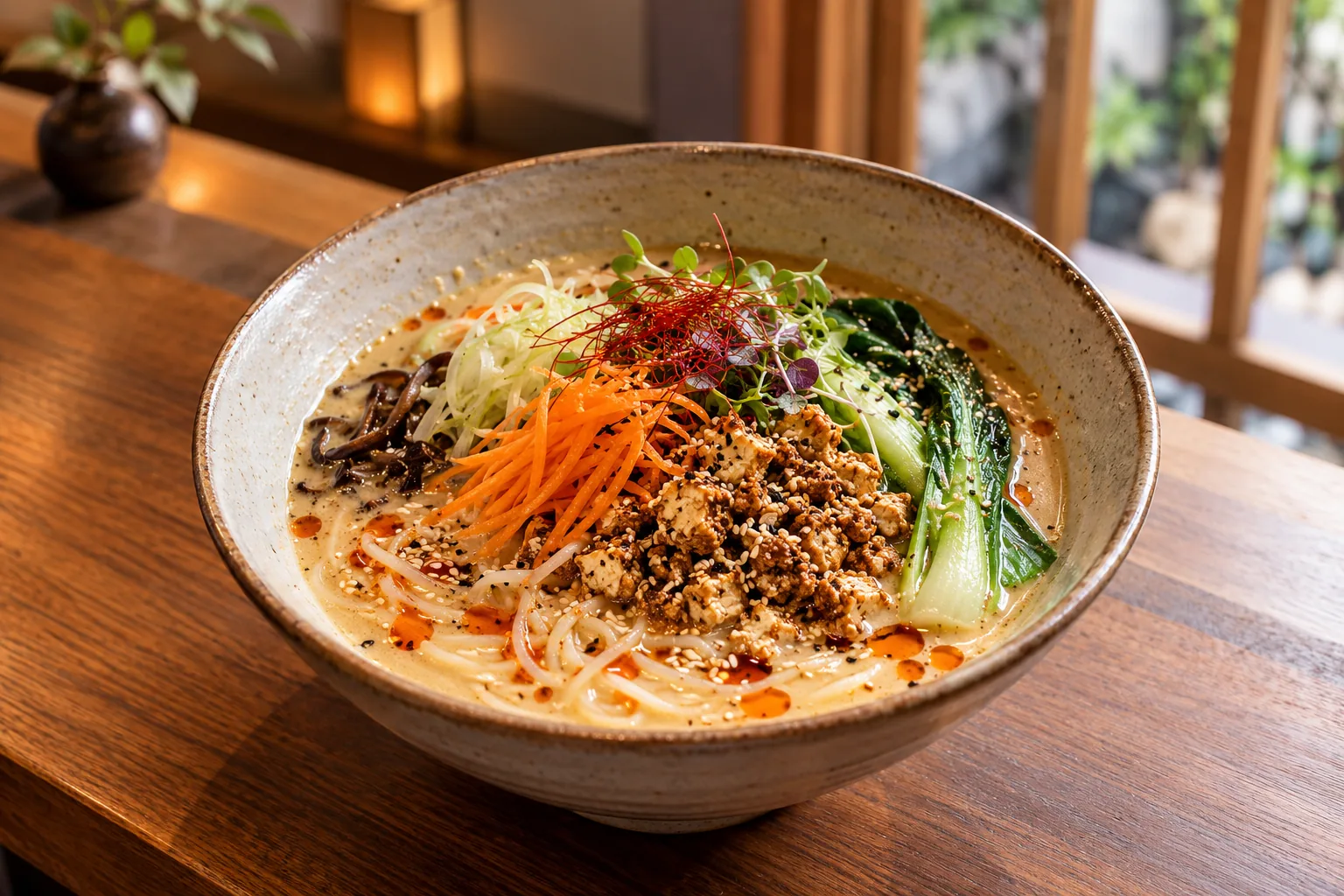
AI-generated editorial cover illustrating plant-based sesame ramen. It is not a photograph of the restaurant or an actual dish served by MERCY Vegan Ramen.
MERCY Vegan Ramen Shijokawaramachi is a new place for vegan ramen in central Kyoto, opened on 29 September 2026. The operator describes it as a specialist ramen shop serving food that is 100% plant-based, free from animal-derived ingredients, the five pungent roots and wheat. Its published menu features sesame-and-soy-milk tantanmen, tomato ramen and shio ramen. This guide covers the exact address, stated hours and checks worth making before you visit, especially if you have allergies.
This article uses information from the operator and the shop's listing; it is not based on an editorial visit or tasting. Vegan therefore describes the restaurant's own claim about its menu, not an independent certification of kitchen procedures or a guarantee against cross-contact. Prices and opening details were checked on 6 October 2026 and may change.
Where it is and how to get there
The operator lists the address as 345-15 Osaka-cho, Shijo-sagaru, Kawaramachi-dori, Nakagyo-ku, Kyoto; its Japanese page prints 京都府京都市中京区河原町通四条下下大阪町345番地15. The listed phone number is +81 80-9870-1234. It is in the Shijo-Kawaramachi shopping district, convenient for exploring central Kyoto on foot. Use the branch name and street address in your map app rather than searching only for MERCY.
For Hankyu Kyoto-Kawaramachi Station, the official MERCY restaurant directory estimates a one-minute walk; the shop listing says about three minutes from the same station and eight minutes from Gion-Shijo. Walking estimates can depend on the exit and route. Check the current map, particularly if you have luggage or need to make a train.
Published hours are 11:00–16:00 and 17:00–23:00, with Wednesdays listed as the regular closing day. The afternoon break matters: arriving shortly after 16:00 does not mean you can order or wait inside. The shop page gives last orders as 15:30 for lunch and 22:30 in the evening; the brand directory also lists the evening service ending at 22:30. Check for updates and holiday changes before planning a late meal.
A vegan offer described as free from the five pungent roots
The brand describes the branch as a specialist vegan restaurant and states that it does not use animal-derived ingredients. In its opening announcement, the operator also says the ramen avoids the five pungent roots (五葷, gokun) and wheat. That combination may be useful for vegan diners and people who avoid those ingredients for personal or religious reasons. These are the operator's claims: we have not independently inspected the kitchen or tested the food.
The announcement gives garlic, negi, nira, rakkyo and asatsuki as examples of the five pungent ingredients. Definitions can vary by tradition, and gokun is not another word for allergen-free. If you follow a religious practice or have a specific dietary need, tell staff which ingredients you avoid and ask about the recipe for the exact dish rather than relying on a generic translation.
The no-wheat statement should also be kept separate from a medical guarantee. The restaurant and its listing describe some ramen as gluten-free and identify rice noodles for the tomato ramen. We could not verify a statement about separate equipment or trace management. If you have coeliac disease or a wheat allergy, ask how ingredients, utensils, cooking water and surfaces are handled. If the answer is not clear enough, follow the advice of your healthcare professional.
Three ramen options and published prices
The shop page lists three main bowls and their prices at the time of checking. The 薬膳豆乳担々麺, a spiced soy-milk tantanmen, is ¥2,420. Its description mentions sesame broth, a soy-based vegetable stock and a special burdock stock, served with vegetables. It is the richest-sounding bowl in the listing and may appeal if you want a creamy, savoury ramen; this is not an editorial tasting note.
Tomato ramen is listed at ¥1,980. The shop says it uses rice-flour noodles and a kombu-based broth with tomato purée. That combination may suit diners looking for a fresher, familiar flavour while still trying a Japanese ramen style. If avoiding wheat is important to you, ask whether the recipe and noodles are unchanged on the day you visit.
Shio ramen, or salt ramen, is listed at ¥1,870. Its description features kombu broth and a special gluten-free noodle, with a more straightforward profile than the tantanmen. The operator states that the ramen contains no animal-derived ingredients. Ingredients, toppings and prices can still be updated, so the menu displayed at the restaurant is the source to use when ordering.
These are prices in yen published on the shop page when we checked on 6 October 2026. We have not verified the cost of extras, drinks or seasonal changes. The listing gives a separate indicative average budget for lunch and dinner, but to avoid presenting that estimate as a price list, we include only the three dish prices it names. Check the current menu and bill before ordering.
How to order thoughtfully
Before choosing, consider your needs separately: vegan, five pungent roots, wheat, soy, sesame and spice are not the same thing. The menu describes the tantanmen as containing sesame and soy milk, so anyone allergic to either should tell staff even though the dish is described as vegan. A restaurant's general policy does not replace checking the exact recipe served that day.
You can show the dish name and ask: 「この料理の原材料とアレルギー情報を確認できますか?」, meaning, “Could you check the ingredients and allergen information for this dish?” To ask specifically about wheat, try: 「小麦を使っていますか?調理器具は共用ですか?」, “Does it contain wheat? Are utensils shared?” These are useful questions, but the answer depends on what staff can confirm at the time.
The shop page lists an English menu and a section for checking availability and reservations. That may make it easier to navigate, but it does not guarantee every allergen detail is translated or a table will be free when you arrive. If you are travelling with a group, check the official booking service before setting out; viewing a calendar is not the same as completing a reservation.
To plan the rest of your day, use our Where to eat directory to compare locations and types of offer, and our vegan Kyoto walk to connect a meal stop with an itinerary. You can also review Learn Japanese before your trip and browse vegan recipes for flavours to look out for in town. Check each venue separately: an itinerary does not make different menus or kitchen policies interchangeable.
Frequently asked questions
Is MERCY Vegan Ramen entirely vegan? The operator describes it as a specialist vegan ramen restaurant and states that its offer is 100% plant-based and contains no animal-derived ingredients. This is the operator's claim, not an independent assessment of kitchen practice or cross-contact. Ask the restaurant about your specific requirements.
Where is it and when is it open? The published address is 345-15 Osaka-cho, Shijo-sagaru, Kawaramachi-dori, Nakagyo-ku, Kyoto. Listed hours are 11:00–16:00 and 17:00–23:00; it is closed on Wednesdays. The MERCY directory and shop listing give slightly different walking estimates, so check the current address and map before you go.
How much does the ramen cost? On 6 October 2026, the shop page listed ¥2,420 for soy-milk tantanmen, ¥1,980 for tomato ramen and ¥1,870 for shio ramen. The operator can change its menu and prices; treat these as published prices, not a permanent quote.
Is it suitable for coeliac disease or allergies? The operator says it avoids wheat and describes rice noodles and gluten-free options, but the sources we checked do not sufficiently explain cross-contact procedures. Name the specific allergen and ask about current preparation; do not infer a health guarantee from vegan or gluten-free wording alone.
Editorial check and cover
Documentary check completed on 6 October 2026 using MERCY's official opening announcement and restaurant directory, plus the shop page for menu, prices and service details. The operator announced the 29 September opening. Vegan, gokun-free and wheat-free statements are attributed to the business; reconfirm prices, hours and availability before travelling. The linked JNTO guide also advises checking broths, sauces and specific ingredients. The cover is an original AI-generated editorial image of plant-based sesame ramen; it does not document the venue or an actual dish served there.