
Recipe
Vegan Mushroom Takikomi Gohan: Japanese Autumn Mixed Rice
Japanese rice cooked with shimeji, maitake, shiitake, carrot and edamame in kombu broth: a complete recipe without fish dashi, for a rice cooker or saucepan.
Practical guide
Complete method
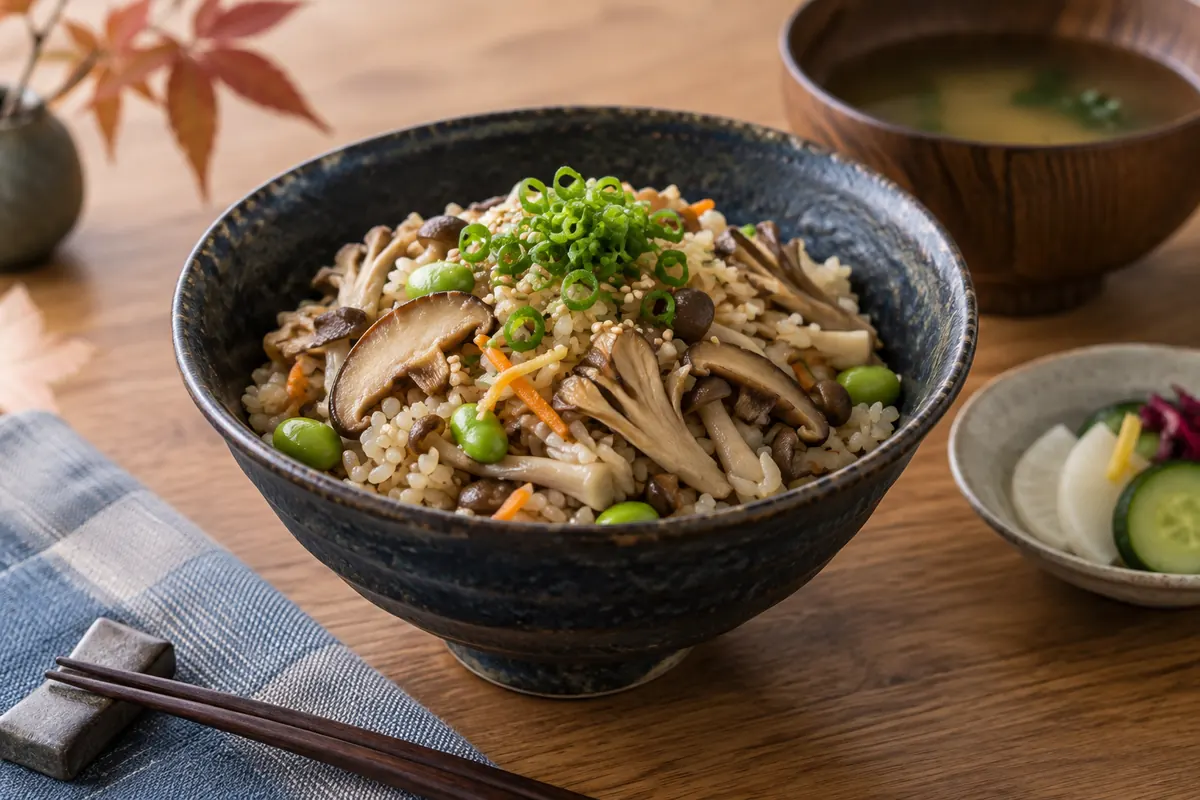
Takikomi gohan is Japanese rice cooked together with mushrooms and seasonings. This vegan version pairs shimeji, maitake, rehydrated shiitake, carrot, ginger and edamame. Its broth combines shiitake soaking water and a piece of kombu, bringing savory depth without katsuobushi or fish-based dashi granules. The recipe serves two and works in a rice cooker or, with a measured liquid ratio, in a heavy saucepan.
Takikomi gohan has no single fixed ingredient list: mushrooms, vegetables and seasonings change with the season and from household to household. A seasonal-food poster from MAFF’s Hokuriku Regional Agricultural Administration Office shows a version with rice, mushrooms, carrot and seasonings, separating the cooking liquid from the solids during preparation. We use that broad method as context; the combination, quantities and steps here are original editorial work. The official source does not publish or certify this specific vegan recipe. (MAFF Hokuriku)
For umami, make plant-based broth rather than choosing a commercial dashi by name alone. JNTO warns that dashi and Japanese sauces may contain fish; a label that says only dashi or 和風だし does not establish that it is vegan. Kombu is kelp and shiitake are mushrooms, but check packaged products too: avoid bonito, katsuobushi, niboshi, sardine, fish extract and stock powders. The official guidance is also linked in the sources below. (JNTO)
Ingredients for two servings: 300 g short-grain Japanese rice; 2 dried shiitake; 1 piece of kombu about 5 × 5 cm; 100 g shimeji; 100 g maitake; 50 g carrot; 60 g cooked, shelled edamame; 8 g fresh ginger; 22 ml soy sauce or tamari; 15 ml mirin; ¼ teaspoon fine salt; about 400 ml cold water for the broth. Keep extra water ready to reach your rice cooker’s fill line.
Place the shiitake and kombu in a container with 400 ml cold water and leave it in the refrigerator for about two hours. If you need a quicker option, use lukewarm water for at least 30 minutes; the broth will be less fragrant. Remove the seaweed and mushrooms, strain the liquid through a fine sieve and reserve it. Slice the rehydrated shiitake because they go into the rice too. Keep the soaking container refrigerated rather than leaving it at room temperature.
Rinse the rice in cold water, moving it gently; change the water several times and drain well without rubbing the grains until they break. Trim the tough mushroom ends, separate the shimeji and maitake into small pieces, and cut the carrot into thin matchsticks. Grate the ginger, reserving some for the end if you want a fresher aroma. The edamame should already be cooked and shelled; if frozen, thaw it according to the package directions.
For a rice cooker, add the rinsed rice to the inner bowl, then add the soy sauce, mirin, salt and strained broth. Top up with water to the level-2 mixed-rice mark in your appliance’s manual; if there is no such mark, follow the manufacturer’s takikomi-gohan ratio and stay below the maximum line. The soy sauce and mirin count toward the total liquid, so do not add a full measure of broth on top of the fill line. Spread the mushrooms and carrot over the rice without stirring.
Select the mixed-rice setting if your manufacturer provides one. When cooking finishes, keep the lid closed for ten minutes, then fluff from the bottom with a rice paddle so the seasoning spreads without crushing the softer grains. Fold in the edamame and half the ginger; taste only now, since the soy sauce and broth have already seasoned the rice. Finish with fresh ginger, scallion or toasted sesame if you like. If the centre is still firm, do not pour in cold water at random: follow your model’s instructions and adjust the liquid on the next attempt.
Without a rice cooker, use a heavy saucepan with a tight-fitting lid. For 300 g rice, measure about 360 ml total liquid, including seasonings: 22 ml soy sauce, 15 ml mirin and strained broth for the remainder. Add the drained rice, liquid and mushrooms, cover and bring to a gentle boil; turn the heat to its lowest setting and cook for the usual time for your rice and pan without opening the lid. Turn off the heat, rest for ten minutes and fluff gently. Heat and lid seals vary, so check the first batch rather than assuming one timing works for every kitchen.
The finished rice should be fragrant, with distinct grains and tender mushrooms—not soupy or dry like a pilaf. If the flavour is too strong, reduce the soy sauce to one tablespoon next time and adjust at the table. Soy sauce contains soy and often wheat; choose tamari only after checking its package, especially for allergies or coeliac disease. This recipe is not an allergen-free claim: also consider cross-contact from work surfaces and utensils.
Serve hot as a complete meal with tsukemono, vegetable soup or plain tofu; a fresh side dish completes it without masking the rice’s aroma. To store leftovers, divide them into shallow, covered portions and move them promptly to the refrigerator or freezer. MAFF advises cooling and storing cooked food quickly; its Bacillus cereus guidance specifically recommends dividing cooked rice and noodles into small portions and refrigerating or freezing them without delay. Reheat thoroughly only the amount you plan to eat, and use it soon. (MAFF,) (MAFF)
From the kitchen
Ingredients
- 300 g short-grain Japanese rice
- 2 dried shiitake (about 6 g)
- 1 piece of kombu, about 5 × 5 cm
- 100 g shimeji mushrooms
- 100 g maitake mushrooms
- 50 g carrot
- 60 g cooked, shelled edamame
- 8 g fresh ginger
- 22 ml soy sauce or verified tamari
- 15 ml mirin
- ¼ teaspoon fine salt
- About 400 ml water for soaking, plus water to reach the level-2 mark
From the kitchen
Method
- 01
Soak the shiitake and kombu in 400 ml cold water in the refrigerator for about two hours. Strain the broth and keep the rehydrated shiitake, slicing them thinly.
- 02
Rinse the rice gently and drain it. Separate the mushrooms into small pieces, cut the carrot into matchsticks and grate the ginger.
- 03
Put the rice in the cooker. Add soy sauce, mirin, salt and broth, then top up with water to the level-2 mixed-rice mark specified in the manual.
- 04
Spread the shiitake, shimeji, maitake and carrot over the rice without stirring. Start the mixed-rice setting or the cycle recommended by the manufacturer.
- 05
When the cycle ends, rest the rice with the lid closed for ten minutes, then fluff from the bottom. Fold in the cooked edamame and half the ginger.
- 06
For a saucepan, use about 360 ml total liquid, including seasonings. Cover, bring to a boil, lower the heat and cook for the usual time for your rice and pan; rest ten minutes before fluffing.
- 07
Serve hot with the remaining ginger and, if you like, scallion or sesame. Cool leftovers quickly in shallow portions and store them in the refrigerator or freezer.
Practical questions
Frequently asked questions
Is this takikomi gohan 100% vegan?
The recipe is designed with plant-based ingredients. To keep it vegan, use kombu-and-shiitake broth without fish, check the soy sauce, mirin and packaged seasonings, and consider cross-contact from utensils and surfaces.
Can I use a rice cooker without a mixed-rice setting?
Yes, if the manual allows rice to be cooked with added ingredients. Follow the manufacturer’s fill mark and cycle, count soy sauce and mirin as part of the total liquid, and stay below the maximum line.
How should I store leftover rice?
Divide it into shallow portions, cover them and move them promptly to the refrigerator or freezer. Reheat thoroughly only the amount you will eat and use it soon, following MAFF’s guidance on cooked-rice storage.
Is it suitable for a gluten-free diet?
Not automatically: traditional soy sauce may contain wheat. Use tamari only if its package confirms it suits your needs, and check the broth, seasonings and cross-contact as well.
Editorial check
Sources and checks
Checked on 28 September 2026 · Recipe and words by Alex Peretto
An original editorial recipe: the sources document the takikomi-gohan method, dashi cautions and food storage, not this specific ingredient combination or its quantities.