
Recipe
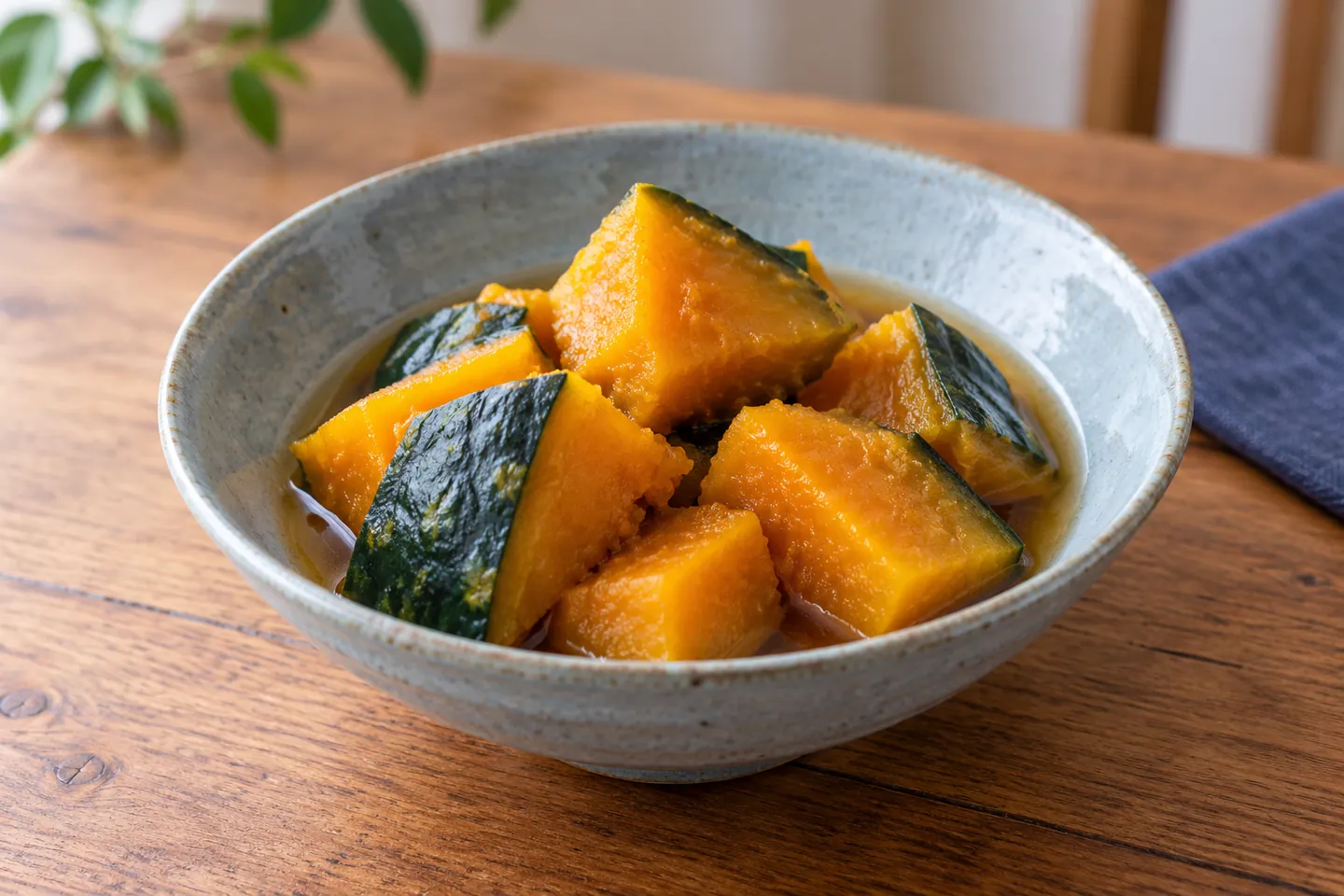
Vegan kabocha no nimono: Japanese simmered squash with kombu
Japanese squash gently simmered with kombu dashi, sugar and shoyu: a tender side dish for two, made with plant-based broth and adapted from a traditional MAFF recipe.
Practical guide
Complete method
Kabocha no nimono (かぼちゃの煮物) is Japanese squash slowly simmered in broth and seasoned with shoyu and a little sugar. This vegan version for two replaces the unspecified dashi with a simple kombu infusion, so you can control the stock from the start. The squash cooks in a single layer, skin-side down, and stays intact without stirring. Use a wide saucepan with a lid. (MAFF · kabocha,) (JNTO · vegan guide)
A recipe published by Japan’s Ministry of Agriculture (MAFF) lists one quarter of a kabocha, 200 ml dashi, sugar, light shoyu and salt. It also recommends cooking the pieces skin-side down, using an otoshibuta, and adding sugar once a skewer passes through easily. We follow that culinary outline, but do not attribute this vegan version to MAFF: here the broth is made with kombu and the instructions explain the substitution. We checked the source on 5 October 2026. (MAFF · kabocha)
For two servings, use a quarter of a large kabocha. The approximate weight of 450–500 g with skin is only a guide because squash vary. You will also need 200 ml kombu dashi, half a tablespoon of sugar, one tablespoon of usukuchi shoyu or light soy sauce, and a pinch of salt. The list is short because the squash’s sweet, nutty flavour should remain in the foreground. Measure the seasonings and adjust only after tasting.
Choose a firm kabocha with intact dark-green skin and orange flesh. Cutting it can take force: steady the board, dry the squash, use a sharp knife and keep your fingers away from the cutting line. Remove the seeds and fibres, then cut the flesh into pieces about 4–5 cm across. Keep them similar in size so they cook at roughly the same rate. Leave the skin on; it helps the pieces hold their shape as they simmer.
To make the broth, place a piece of kombu about 5 × 5 cm in 200 ml cold water and leave it to steep in the refrigerator for about 30 minutes. Remove the kelp and use the liquid; if the kombu has absorbed some water, top it up to 200 ml. This is a practical method for this recipe, not a universal extraction time: flavour also depends on the thickness of the seaweed. Kombu adds plant-based savouriness without overwhelming the squash. (JNTO · dashi)
The word dashi alone does not tell you whether a stock is plant-based. JNTO’s vegetarian and vegan guide notes that Japanese broths and seasonings can contain fish; its separate guide to dashi distinguishes kombu infusion from broths made with katsuobushi or niboshi. If you are not making the stock yourself, read the ingredient list rather than choosing a powder simply because its front label says “vegetable” or “dashi.” (JNTO · vegan guide,) (JNTO · dashi)
Arrange the kabocha in a single layer in a wide saucepan, with the skin facing the bottom. Pour the cold kombu dashi around the pieces; it should not cover them. If the pan is too small and the squash overlaps, use a second pan or cook in two batches. Crowding makes the heat less even and increases the chance that the pieces at the bottom will break down before the upper ones soften. Bring the liquid to a gentle boil. (MAFF · kabocha)
As soon as the liquid begins to simmer, lower the heat to medium-low. Cover the surface with an otoshibuta, a traditional inner lid that rests over the ingredients: use a suitable lid or a round of parchment paper with a small hole in the centre. It helps circulate the liquid and limit splashing; it should not press down on the squash. If you do not have one, use a regular lid slightly ajar and check that the pan does not dry out. (MAFF · kabocha)
Cook without stirring and check the pan after about twelve minutes. Timing varies with the squash variety and age, the size of the pieces and the burner, so treat the clock as a reminder rather than a guarantee. Push a bamboo skewer into the thickest piece: when it enters with little resistance but the piece still holds together, the flesh is ready for seasoning. If it is still firm, keep simmering gently for a few minutes and check again. (MAFF · kabocha)
Once the skewer passes through easily, add the sugar and simmer for another five or six minutes with the inner lid in place. Delaying the sugar helps you distinguish the squash’s tenderness from the reduction of the seasoning and follows the method documented by MAFF. Do not raise the heat to hurry the process: a strong boil knocks the pieces together and can break their edges. If the pan is nearly dry before the kabocha is tender, add a spoonful of water and lower the heat. (MAFF · kabocha)
Add the light shoyu and a pinch of salt only after tasting the liquid. Simmer for a few more minutes, leaving a small amount of glossy sauce rather than a deep pool. To distribute the flavour, hold the handles with a cloth and gently move the pan back and forth; avoid turning each piece with a spoon. For a milder result, start with half the shoyu and add more at the end if needed.
Turn off the heat and leave the squash in its seasoning for ten minutes. During the rest it absorbs flavour, and residual heat finishes the cooking; the exact degree of softness depends on the cut. If the flesh is already very tender, lift the pieces out with a slotted spoon and spoon only a little sauce over them. For a glossy finish, baste each piece gently without crushing it. Serve warm or at room temperature.
The kombu-only version has a delicate flavour. For greater depth, you can use dashi made with dried shiitake as well, provided it contains only plant-based ingredients; add the rehydrated mushroom to the dish only if you like it, since it changes the texture and aroma. Miso, garlic and oil are not needed: adding them turns this simple preparation into another dish. If you change the ingredients, taste the broth again before adding salt. (JNTO · vegan guide,) (JNTO · dashi)
To keep the recipe vegan, check the broth and every packaged seasoning, especially if you use a ready-made sauce. Kabocha and kombu do not introduce animal ingredients, but the generic word dashi does not rule out fish. Soy sauce contains soy and may contain wheat; if you have an allergy or coeliac disease, check the specific product label and consider cross-contact from utensils. Vegan does not automatically mean allergen-free. (JNTO · vegan guide)
Serve the kabocha as a side dish straight from the pan, or plate it in a small bowl with plain rice and tofu. To build a Japanese plant-based meal, continue with the recipes linked below: mushroom takikomi gohan, miso nasu dengaku and sesame goma-dofu. They are distinct preparations, not courses from one traditional set menu; combine their flavours and portions to suit the meal you want to make.
For leftovers, transfer the squash and a little sauce to a shallow, covered container; do not leave the pan out for a long time after the meal. MAFF’s food-storage guidance recommends cooling and refrigerating cooked foods promptly. Reheat thoroughly only the portion you plan to eat, and use it soon: a normal smell and appearance do not prove that food is safe. Discard it if anything seems unusual, without tasting it. If preparing the dish ahead, keep the pieces whole and spoon the sauce over them when plating. (MAFF · food storage)
From the kitchen
Ingredients
- 1/4 of a large kabocha (about 450–500 g with skin; approximate weight)
- 200 ml cold water
- 1 piece kombu, about 5 × 5 cm
- 1/2 tablespoon sugar (about 6 g)
- 1 tablespoon usukuchi shoyu or light soy sauce
- A pinch of salt, adjust after tasting
From the kitchen
Method
- 01
Steep the kombu in 200 ml cold water in the refrigerator for about 30 minutes. Remove the kelp and use the infusion as plant-based dashi.
- 02
Remove the seeds and fibrous flesh from the kabocha. Cut it into 4–5 cm pieces, leave the skin on and trim the sharp corners lightly.
- 03
Arrange the pieces in a single layer in a wide saucepan, skin-side down. Pour the kombu dashi around the squash.
- 04
Bring to a boil, lower the heat to medium-low and cover with an otoshibuta or a parchment-paper round. Simmer without stirring until a skewer slides in easily.
- 05
Add the sugar and simmer for another 5–6 minutes with the inner lid in place.
- 06
Taste the liquid, add the shoyu and a pinch of salt, then cook until only a little glossy sauce remains. Gently shake the pan rather than stirring.
- 07
Turn off the heat and leave to rest for 10 minutes. Serve warm or at room temperature with a little sauce spooned over.
Practical questions
Frequently asked questions
Is kabocha no nimono always vegan?
No. Simmered squash may be made with fish-based dashi. This version uses a kombu infusion; check the ingredients and seasonings when ordering at a restaurant or using packaged stock.
Can I use instant dashi?
Only if the product label confirms that it is suitable for a vegan diet. Dashi may contain katsuobushi, niboshi or other fish ingredients, so the name alone is not enough.
Why cook the squash skin-side down?
The MAFF recipe recommends placing the pieces in one layer, skin-side down, and using an inner lid. This helps them cook evenly and avoids breaking the flesh while stirring.
How do I know when the kabocha is ready?
A bamboo skewer should enter the thickest part with little resistance while the piece still holds its shape. Timing varies by size and variety, so check the texture rather than relying only on the clock.
How should I store leftovers?
Transfer leftovers to a shallow container, cool them and refrigerate promptly. Reheat thoroughly only the portion you plan to eat and use it soon; a normal smell and appearance do not guarantee that food is safe.
Editorial check
Sources and checks
Checked on 5 October 2026 · Recipe and words by Alex Peretto
An editorial vegan adaptation based on MAFF’s published recipe: the source lists kabocha, 200 ml dashi, sugar and shoyu, but does not specify a vegan stock. This version uses kombu dashi and explains what to check on labels; timing varies with the squash and pan. The AI-generated cover is illustrative, not a photograph of a dish cooked or served by the editorial team.