
Recipe
Vegan kinpira gobo: Japanese-style stir-fried burdock and carrot
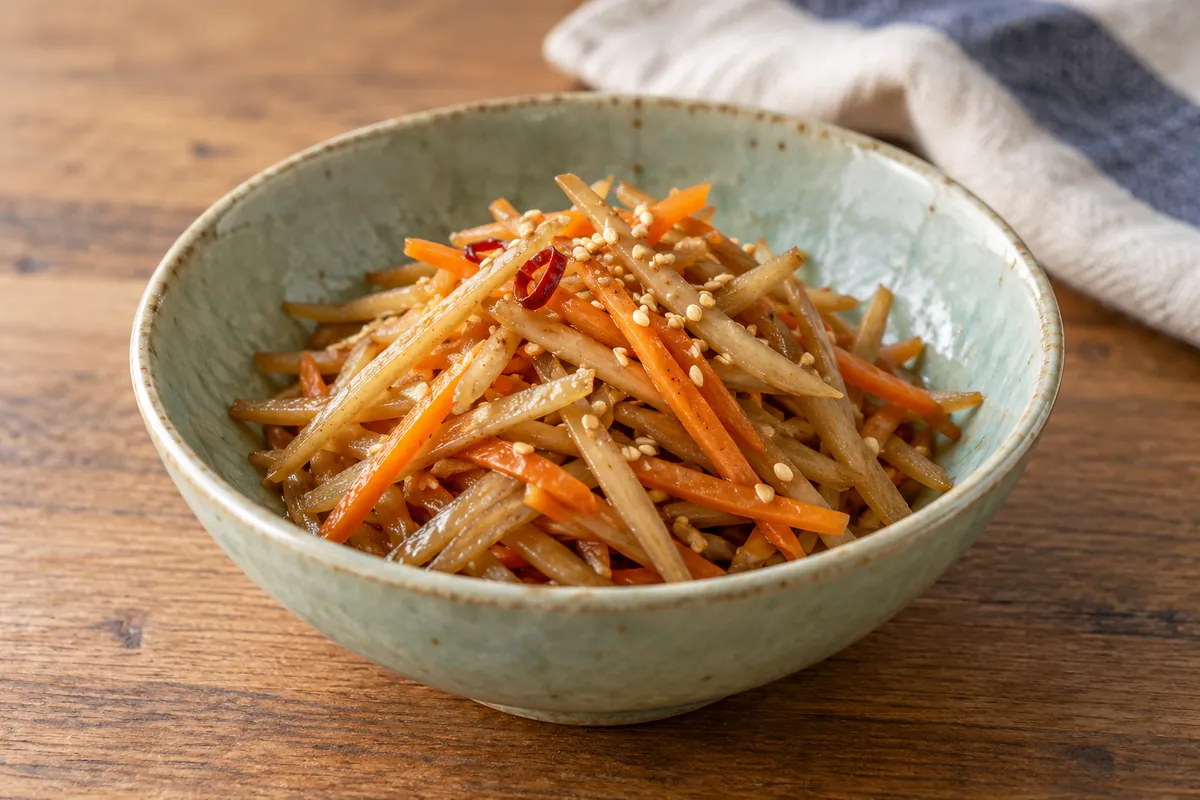
Thin strips of burdock and carrot, stir-fried and glazed with shoyu, mirin and sesame: a vegan Japanese side dish for two, made without dashi.
Practical guide
Complete method
Vegan kinpira gobo is a Japanese side dish of burdock and carrot cut into matchsticks, stir-fried and seasoned with soy sauce, a little sweetness and sesame. This plant-based version serves two, takes about 30 minutes and uses no stock: there is no need to add dashi, which is often made with fish. The root stays pleasantly firm while the sauce reduces to a glossy coating. It is easy to serve with rice and tofu, and flavourful enough for a bento.
Japan’s Ministry of Agriculture, Forestry and Fisheries (MAFF) describes kimpira as a preparation common in Tokyo: vegetables sliced or cut finely, stir-fried and seasoned with soy sauce and sugar. Gobo (burdock) and carrot are presented as the classic pairing, and the same source publishes a recipe for two. The quantities and mirin combination below are an original editorial adaptation, not a transcription or official MAFF recipe. The source was checked on 26 October 2026. (MAFF · Tokyo kimpira,) (MAFF · kinpira gobo)
For two generous portions, prepare 150 g gobo, 60 g carrot, 60 ml water, one tablespoon shoyu, one tablespoon mirin, one teaspoon sugar, one tablespoon neutral vegetable oil, one teaspoon toasted sesame oil and one tablespoon sesame seeds. Half a small red chilli is optional. The sauce is measured to coat the vegetables rather than make them soupy. If the root is thick or your pan is wide, keep an extra tablespoon of water nearby.
When buying gobo, choose a firm root without soft or dried-out spots. It may be sold whole and long at Japanese or Asian grocers; if you find only pre-cut pieces, check that they look fresh and have been stored properly. Burdock has an earthy aroma and fibrous texture that remain noticeable after cooking. If you cannot find it, lotus root can make a kinpira-inspired variation, but the result changes: do not describe it as an identical substitute for gobo.
Rinse the root under running water and gently scrub its surface with a clean vegetable brush. MAFF notes that the skin holds flavour and recommends scrubbing; another official Japanese recipe describes scraping it with the back of a knife. For this version, remove soil and small impurities without peeling deeply. If the root is very dirty or its surface is damaged, use a peeler only where needed. (MAFF · Tokyo kimpira,) (MAFF · kinpira gobo)
Place the gobo on a stable cutting board and cut it into pieces about five centimetres long. Split each piece lengthwise and slice it into thin matchsticks. Aim for an even thickness rather than restaurant-level precision: thick strips can remain tough in the middle, while very thin ones may soften before the sauce reduces. If the root is thick, halve or quarter it lengthwise first, keeping your fingers clear of the blade.
Place the strips in a bowl of cold water for five or six minutes, then drain and dry them well with a clean towel or kitchen paper. The short soak appears in MAFF’s Japanese kinpira gobo recipe; there is no need to leave them in water for a long time. This rinses the freshly cut surface, but the water does not need to become perfectly clear. Drying the root before stir-frying prevents splatter and helps the oil coat it. (MAFF · kinpira gobo)
Peel the carrot and cut it into matchsticks about as long as the gobo, slightly thinner if the carrot is wide. This helps it cook in a similar time while retaining some bite. In a small bowl, mix the water, shoyu, mirin and sugar until the sugar dissolves. Preparing the sauce before turning on the heat lets you add it all at once. Remove the chilli seeds for mild heat, or omit the chilli entirely; the dish remains recognisable without spice.
Heat a wide pan over medium-high heat and add the neutral oil. When it is hot but not smoking, add the well-dried gobo and stir-fry for two or three minutes, stirring often with a spatula or tossing the pan. The root should begin to soften without browning. If it sticks, lower the heat slightly and add a teaspoon of water; do not automatically add more oil, since burdock absorbs seasoning and an oily pan can make the finish heavy.
Add the carrot and chilli, if using. Stir-fry for about one minute: the carrot should warm through and stay bright, not turn soft. Adding both vegetables at the same time can overcook the carrot while the gobo is still firm. If the strips are uneven, taste one before adding the sauce and cook for another minute if needed. The finished vegetables should be tender but retain a slight crunch.
Pour the shoyu, mirin, water and sugar mixture into the pan. Let it return to a simmer, then stir and cook over medium-high heat for about four to six minutes. Timing varies with the pan’s width, the thickness of the vegetables and the burner. As the liquid reduces, turn the vegetables more often so the sauce spreads and the sugar does not burn. If the pan dries before the gobo is tender, add a tablespoon of water and lower the heat.
Turn off the heat when only a little glossy sauce remains and the strips are coated rather than submerged. Taste a piece of gobo: if it is still too fibrous, add a little water, cover the pan for a minute or two, then uncover it to let the remaining steam escape. If it is already tender, do not keep reducing the sauce just to make it darker. Shoyu becomes salty as it concentrates, so taste before adding salt and remember that soy sauces differ in saltiness.
Off the heat, add the toasted sesame oil and stir, then finish with sesame seeds. The aromatic oil is optional; adding a small amount at the end keeps its aroma clearer than prolonged heating. For a milder flavour, omit the sesame oil and use only toasted seeds. Add a pinch of chilli for heat or leave it out for a gentle side dish. Serve in a small bowl, warm or at room temperature, without extra sauce at the table.
This recipe uses plant-based ingredients and needs no dashi. That distinction matters because JNTO explains that kombu or shiitake broths can suit a vegan diet, while some dashi is made with dried sardines or katsuobushi. If you choose packaged stock, check its full ingredient list; the word dashi alone is not enough. Check the specific shoyu and mirin too. The recipe contains soy and sesame; for allergies, consider cross-contact and shared utensils as well. (JNTO · types of dashi)
Kinpira gobo goes well with plain rice, grilled tofu or miso soup made with vegetable broth. Serve it as a small side in a home-style Japanese meal or pack it in a bento after it has cooled. Its flavour is concentrated and savoury, so a modest portion is enough for each person. To continue with home-cooked dishes, explore the site’s other plant-based recipes: mushroom takikomi gohan, sesame goma-dofu and shiso onigiri are different preparations that can round out a meal without relying on the same seasonings.
The kinpira method is not limited to one fixed pair of vegetables: MAFF notes that the term is also used today for other roots, such as lotus, stir-fried with sweet-savoury seasoning. For a variation, replace some of the carrot with thinly sliced lotus root, adjusting the cooking because its texture differs. If you prefer less sugar, reduce it to half a teaspoon and taste at the end. Do not remove all the liquid: a little helps season and soften the gobo without masking its flavour. (MAFF · Tokyo kimpira)
To prepare ahead, wash the carrot and measure the sauce, but it is best to cut the gobo shortly before cooking because the exposed root can darken. If you need to cut it earlier, keep it briefly in cold water, then drain and dry it well before adding it to the pan. Do not leave it soaking for hours; that takes time and may dull its flavour. There are only a few preparation steps and the cooking is quick, so organise the ingredients and utensils first and then stir-fry without interruption.
Store leftovers in a shallow, covered container and refrigerate them once they have cooled; do not leave the pan at room temperature for an extended period. MAFF recommends transferring cooked food to containers or wrapping it and refrigerating it promptly, eating it soon and reheating the portion thoroughly. Kinpira may lose some crispness as it rests, but it still works as a cold lunch side. Discard it if anything seems unusual: normal smell and appearance alone do not guarantee safety. (MAFF · food storage)
Editorial verification: 26 October 2026. Public MAFF sources describe kinpira as a cooking method and give regional examples using gobo, carrot and seasonings. The quantities, choice of mirin and specific steps on this page are an original adaptation, not an official Ministry recipe. Our editors have not kitchen-tested this preparation. The cover is an AI-generated illustrative image, not a photograph of a recipe prepared or served by our team. (MAFF · Tokyo kimpira,) (MAFF · kinpira gobo)
From the kitchen
Ingredients
- 150 g burdock root (gobo)
- 60 g carrot
- 60 ml water
- 1 tbsp shoyu or soy sauce
- 1 tbsp mirin (check the label)
- 1 tsp sugar
- 1 tbsp neutral vegetable oil
- 1 tsp toasted sesame oil
- 1 tbsp toasted sesame seeds
- 1/2 small red chilli, deseeded (optional)
From the kitchen
Method
- 01
Rinse the gobo and scrub it with a brush. Cut it into pieces about 5 cm long, then slice each piece into thin matchsticks.
- 02
Soak the strips in cold water for 5–6 minutes. Drain and dry them very well before stir-frying.
- 03
Peel the carrot and cut it into thin matchsticks. Mix the water, shoyu, mirin and sugar in a small bowl.
- 04
Heat the neutral oil in a wide pan over medium-high heat. Add the chilli if using, then stir-fry the gobo for 2–3 minutes, stirring often.
- 05
Add the carrot and cook for about one minute. It should warm through while staying firm.
- 06
Pour in the sauce and cook for 4–6 minutes, turning often, until it reduces and coats the vegetables. If the pan dries too soon, add a tablespoon of water.
- 07
Turn off the heat, then add the sesame oil and toasted seeds. Taste and serve warm or at room temperature.
Practical questions
Frequently asked questions
Is kinpira gobo always vegan?
Burdock and carrot are plant-based, but recipes can vary. This version uses no dashi; check the shoyu, mirin and packaged ingredients, as well as possible cross-contact.
Do I need to peel the gobo?
Not necessarily. MAFF suggests scrubbing the surface to preserve its flavour; another Japanese MAFF recipe describes scraping it. Wash it well and remove only damaged areas if you prefer.
Why soak the gobo in water?
A MAFF kinpira gobo recipe calls for a short soak of about five or six minutes. Drain and dry the strips before stir-frying; there is no need for a long soak.
Can I use a root vegetable other than burdock?
You can try lotus root or another crisp root vegetable, though the flavour and cooking time will change. MAFF notes that kinpira is also used today for other roots stir-fried in a sweet-savoury sauce.
Is dashi necessary?
No. This version uses water and seasonings. If you add ready-made dashi, check its ingredients: some products contain katsuobushi or dried sardines.
Editorial check
Sources and checks
Checked on 26 October 2026 · Recipe and text by Alex Peretto
An original editorial adaptation informed by two MAFF kinpira references; the quantities and use of mirin are not the Ministry’s official recipe. This preparation has not been kitchen-tested by our editors. The cover is an AI-generated illustration.